
Why our gaming setup can feel off
We spend thousands on gaming gear but still feel something is off. A single frame drop or audio echo can make a rig that benchmarks great feel cheap. We notice inconsistency before we notice specs.
That feeling usually comes from mismatches between hardware, software, and the space around us. A 240Hz monitor paired with a 60Hz console, mismatched input latency, or drivers that don’t talk to each other create friction. These are design and ecosystem problems, not just raw performance gaps.
In this article we explain what breaks the experience and why it matters in our product reviews. We focus on practical fixes and buying choices that align hardware, software, and our routines. We want smoother, smarter setups.


Consistency Is the Key for Your Ultimate Gaming Setup
When performance and perception don’t match
We often equate higher numbers with better play, but the moment-to-moment reality is what shapes our feeling of smoothness on a gaming PC. A headline “120 fps” means little if those frames arrive unevenly.
Frame rates, frametimes, and why averages lie
Average FPS is an easy headline, but what hurts our experience is inconsistent frametime — the actual milliseconds between frames. A steady 60 fps at perfectly even intervals feels buttery; a 90 fps sequence with uneven spacing can look jittery on a gaming monitor. That’s why a game with a 60 fps average and 1% lows at 55 will feel noticeably better than one with a 90 fps average and 1% lows dipping to 30.
We’ve seen this in practice: open-world games that stream assets can loop CPU spikes into visible hitching even on GPUs that benchmark “well.” If you care about how a game feels, look for 1% and 0.1% lows and frame-time graphs, not just averages.
Benchmarks, optimizations, and marketing gaps
Synthetic benchmarks and marketing slides optimize for best-case scenarios. Vendors pick game patches, drivers, and settings that show high averages. Developers optimize differently too — a popular AAA title might be tuned for consoles or specific GPUs, producing wildly different results on other hardware. That’s why two rigs with similar specs can behave very differently in the same game.
Actionable tip: consult real-game benchmarks (with settings that match how you play) and check community reports for a given GPU + game combo before buying.
Drivers, thermals, and the micro-stutter culprits
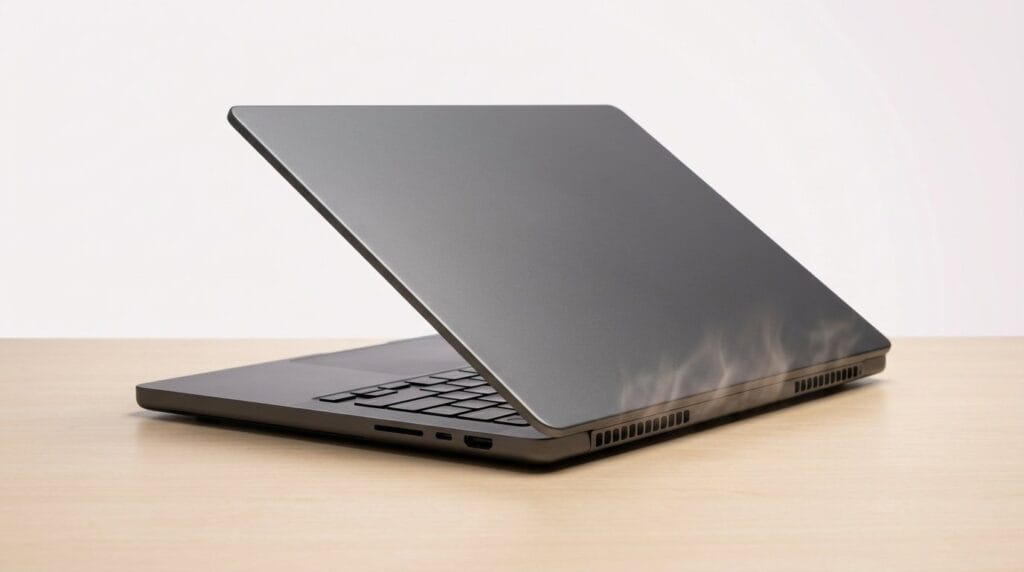
Micro-stutters often come from drivers’ scheduling, shader compilation, or thermal throttling. A GPU that hits a thermal limit will drop clocks and produce visible hitches; drivers that recompile shaders in the background will spike frametimes. Input latency compounds the issue — high, variable latency makes smooth visuals feel sluggish.
Simple fixes include enabling low-latency modes (NVIDIA Reflex/AMD Anti-Lag), capping frame rates slightly below your monitor’s refresh, and keeping drivers up to date—or rolling back to a proven driver for a particular title.
What we should prioritize if smoothness matters
These trade-offs matter now more than ever because manufacturers sell specs; our job is to translate those specs into consistent, playable reality across keyboards and controllers alike.
Input and output: mismatched peripherals and displays
We expect a twitch of our finger to translate instantly into onscreen action, but clocks and protocols living inside mice, controllers, keyboards, and panels don’t always cooperate. The result is a subtle disconnect—cursor drift, perceived sluggishness, or visual tearing—that makes a setup feel “off” even when specs look good on paper.
Polling rates, USB vs. wireless, and felt latency
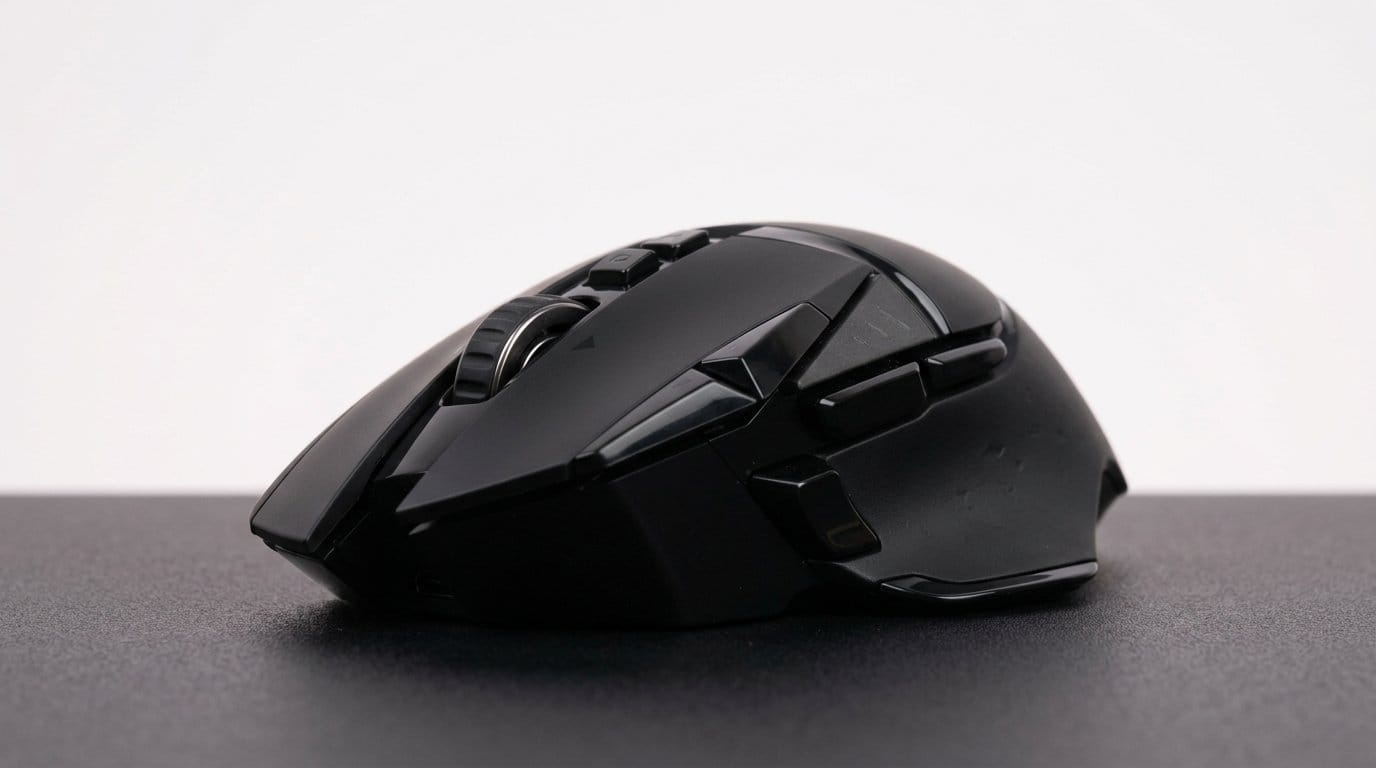
Polling rate is the heartbeat of input. A 1,000 Hz mouse reports every millisecond; 125 Hz reports every 8 ms. That difference is small on paper but huge for competitive feel. Wireless tech has closed the gap—Logitech Lightspeed and Razer Hyperspeed routinely hit 1,000 Hz equivalent—but bluetooth stack.
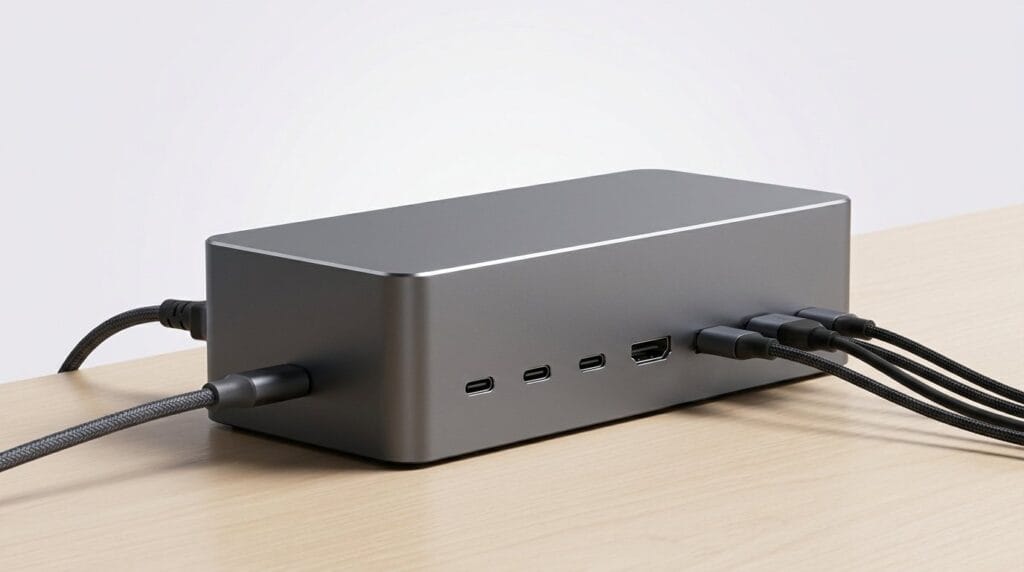
We’ve seen laptops on USB hubs drop a mouse to 125 Hz, turning a precise aim routine into mush. Similarly, controllers on bluetooth low energy beacon.
Adaptive sync and refresh mismatch
A high-DPI mouse on a 60 Hz monitor often feels different than on a 144 Hz panel because the display only updates so often. Even if the mouse is ultra-fast, the monitor’s cadence determines how smoothly motion appears. Adaptive sync (G-Sync/FreeSync) helps, but it’s not magic: when frame delivery floats around the monitor’s limits, you can get stutter or judder. Mismatches (GPU/monitor incompatible ranges, or V-Sync toggling) create perceptual hiccups that feel like input lag.
Color, HDR handling, and the visual mismatch
Peripherals can be consistent while the display isn’t. Two monitors with different gamut/HDR handling will make the same game look wildly different. Poor HDR tone mapping or mismatched color profiles can make scenes look flat or oversaturated, breaking our expectations when moving between displays or when a game switches HDR modes.
Firmware, drivers, and proprietary features
Software features—acceleration, smoothing, lift-off tuning, or proprietary macros—can be silent culprits. Windows’ pointer precision, Logitech/G Hub smoothing, and some mice’s firmware-level acceleration alter the mapping between hand movement and on-screen motion. Different vendors implement these quirks differently, so mixing brands can feel inconsistent.
Practical harmonizing steps
Keeping clocks, protocols, and software intentions aligned is often the cheapest way to make a rig feel cohesive.
Sound, network, and latency: the invisible threads
We spend a lot of time dialing visuals, but audio and network systems are the quiet parts of a setup that shape how “right” a game feels. When footsteps appear behind us a beat late, or a firefight resolves in a way that feels unfair, those invisible threads are usually to blame.
Spatial audio and platform DSP
Spatial audio isn’t magic; it’s a stack of HRTF profiles, upmixers, and platform-specific processing. Windows Sonic, Dolby Atmos, and PS5’s Tempest all implement spatialization differently. The same headset can sound wide and precise on a PC with Dolby Atmos, muddled on a Switch, and oddly centered on a PS5 because each platform applies different filters and sample-rate conversions. We’ve heard an Arctis 7 give pinpoint cues on PC (USB dongle + Windows spatial) but blur slightly when paired to a phone over AAC.
Bluetooth vs. wired: the trade-offs
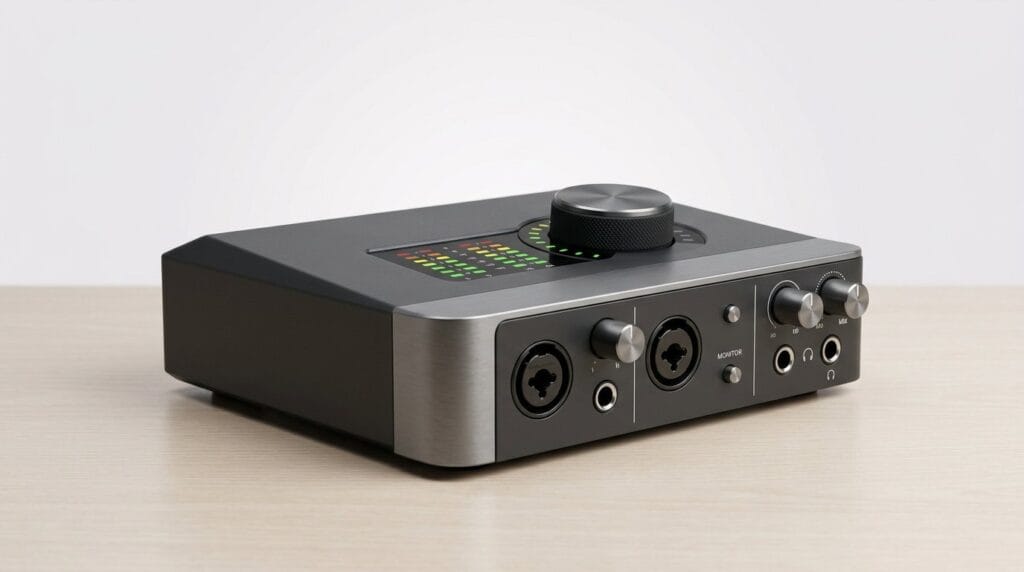
Bluetooth convenience comes at a cost: compression, re-sampling, and variable latency. SBC and AAC can introduce smearing; aptX LL or LDAC reduce quality or delay only if both ends support them. For competitive play, wired analog or USB audio eliminates codec uncertainty and provides consistent low-latency monitoring. If you need wireless, pick headsets with proprietary RF dongles (SteelSeries, Razer) or explicitly low-latency Bluetooth codecs and test them in your actual platform.
Voice chat and codecs
Voice quality isn’t just “clear” vs “muffled.” Codecs (Opus, CELT variants) and server-side processing (noise suppression, echo cancellation) alter timing and intelligibility. Cross-platform party chat often transcodes voice, introducing micro-delays that wreck timing-sensitive calls in competitive squads. Use native platform voice when possible, prefer push-to-talk to reduce perceived lag, and test voice on the same network conditions you play under.
Network jitter, packet loss, and matchmaking
A steady 30 ms ping feels great; a 30–120 ms ping that hops around does not. Jitter and packet loss break client-side prediction and trigger server reconciliation—what you saw on your screen gets “rewound,” and you die before your inputs arrive. Server tick rate matters too: 20–30 Hz games feel forgiving; 64–128 Hz shooters feel tight. Cloud streaming and distant matchmaking add layers—each hop adds latency variance.
What to test and change right now
Tuning these invisible systems removes a lot of the “something’s off” feeling faster than upgrading a GPU.
Software, drivers, and ecosystem fragmentation
Software is the invisible glue that makes hardware behave the way we expect — or not. OS features, driver stacks, game launchers, overlays, and firmware updates continuously reshape timing, input handling, and visuals. That’s why two identical GPUs or headsets can act differently on Windows, macOS, or Linux: each platform exposes different APIs, driver models, and performance knobs.
Why identical hardware diverges
Manufacturers ship proprietary hooks — NVIDIA’s DLSS and Reflex, AMD’s FSR and Radeon Boost, Valve’s Steam Input layers, or console-exclusive audio paths — that sit between the game and the hardware. Those features improve experience when they work, but they fragment the ecosystem. A GTX 1660 on Windows 10 might run a game slightly smoother than the same card under a beta Windows 11 driver, simply because of scheduler or driver changes. On Linux, the same GPU may need a different driver stack entirely (open-source vs proprietary), changing latency and power behavior.

Marketplace incentives that produce fragmentation
Companies race for differentiation: exclusive features, integrated cloud services (GeForce Experience, Xbox Game Pass, Razer Central), and performance claims. That competition rewards shiny additions, not compatibility. The result: an arms race of features that aren’t standardized, so we juggle multiple apps, background services, and conflicting overlays — each a potential source of micro-stutter, input lag, or unexpected behavior.
Practical steps to reduce software-driven inconsistency
We can’t eliminate vendor-driven fragmentation overnight, but by choosing where we compromise and by controlling updates and background services, we regain a predictable baseline — a baseline we’ll need to tune around our physical space and daily habits in the next section.
The room, the chair, and our routines: human-centered sources of inconsistency
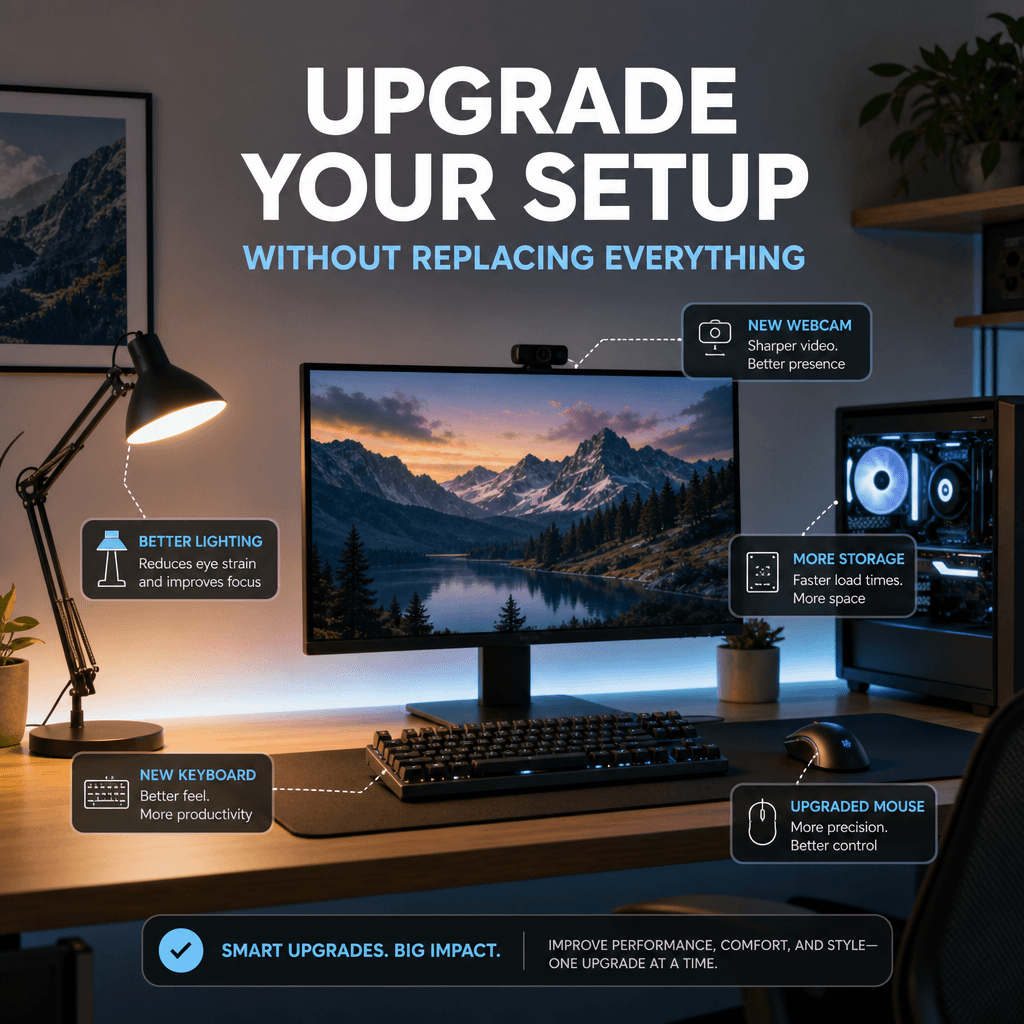
We’ve talked about latency, drivers, and mismatched peripherals; now we step back and look at the simplest — and most overlooked — causes of a setup that “feels off.” Small changes in our physical space and habits warp perception in ways hardware specs don’t capture. Game designers assume ideal lighting, a neutral acoustic field, and a player who’s warmed up; most of us play in living rooms, shifts, and noisy homes. That mismatch is where inconsistency breeds.
Ergonomics: posture, chair, and sightlines
Comfort is performance. A sagging chair or a monitor perched too high forces us into tension: tighter shoulders, shorter tracking distance, jittery aim. We’ve seen players jump from a cheap office chair to a Secretlab Titan or a used Herman Miller Aeron and report immediate consistency in their inputs — not because their reflexes changed, but because their bodies stopped fighting the desk.
Practical steps
Lighting and visual consistency
Glare, shifting daylight, and mismatched color temperatures change how we perceive contrast and depth — and that affects target acquisition and reaction. Bias lighting (soft LEDs behind the monitor) reduces eye strain and makes colors pop consistently. Smart bulbs from Philips Hue or inexpensive tunable strips do more to stabilise visual perception than tweaking in-game gamma.
Acoustics and focus
Sound shapes our sense of space and reaction timing. A noisy room masks footsteps; a room with flutter echo blurs directional cues. Good headphones or basic acoustic panels tighten the soundstage and reduce cognitive load.

Routines, session design, and household variables
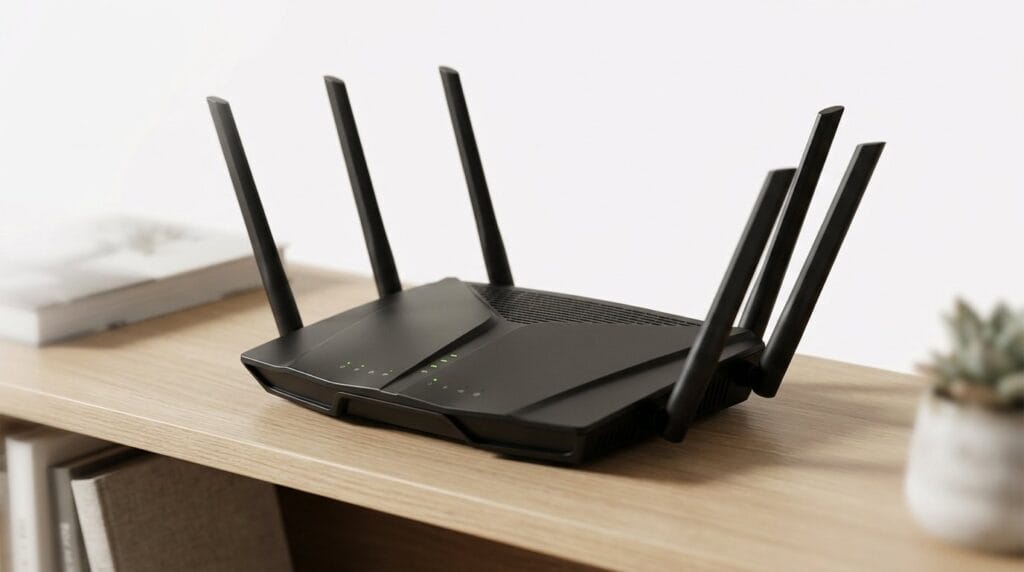
Our bodies and networks have rhythms. Skipping warm-ups, inconsistent session lengths, late-night caffeine binges, or peak-time house internet use all show up as variability in play. We mitigate this by building rituals: a 10‑minute aim warm-up, a pre-game checklist (update drivers, close heavy apps), and configuring router QoS or a mesh system (Asus RT-AX86U, Netgear Orbi) to stabilize bandwidth during peak hours.
Small investments, big returns
A short checklist that pays dividends
These human-centered fixes are cheap relative to a GPU upgrade, but they give us more consistent, repeatable sessions — the baseline we need before we chase technical optimizations. In the conclusion, we’ll pull these threads together into pragmatic fixes and buying signals.
Bringing it together: pragmatic fixes and buying signals
We end with a tight checklist: prioritize steady frame pacing over peak FPS; match peripheral polling and display refresh; lock down audio paths and network expectations; keep drivers and ecosystem components updated but controlled; and optimize chair, lighting, and routines for consistent input. These are practical buy signals—low-latency displays with variable refresh, wired input devices, quality DAC/headset, a router that prioritizes gaming traffic, and a comfortable, repeatable physical setup.
Understanding how design choices and platform incentives interact matters more than chasing raw specs. Spend on smoothing experience rather than headline numbers: consistency yields perceived quality, less frustration, and longer enjoyment with a matched gaming mouse and display pipeline. We’ll get better playtime returns by choosing consistency over spec-driven upgrades instead.
Frequently asked questions
What is the main point of “Why Your Gaming Setup Feels Inconsistent”?
This piece explains where why your gaming setup feels inconsistent matters in real buying decisions—not just headline specs. We focus on trade-offs, who benefits most, and what to verify before you spend.
Who should read this why your gaming setup feels inconsistent guide?
Read it if you are actively shopping, upgrading, or trying to separate marketing claims from day-to-day use. Skip it if you already own the gear and are not planning a change this season.
What changed recently around why your gaming setup feels inconsistent?
Prices, firmware, and feature tiers shift quickly in this category. We call out what is new enough to affect your decision and what is incremental hype you can safely ignore.
How should I use this editorial when buying?
Treat it as context before you compare models: note the risks and priorities here, then cross-check specs and current pricing on the picks that match how you actually use the product.
What is easy to get wrong about why your gaming setup feels inconsistent?
Buyers often overweight one spec—brightness, speed, or brand—and underweight fit for their room, ecosystem, or warranty support. We flag the mismatch we see most often in reader questions.
Where should I go next after reading?
Use the related comparisons and top picks linked near the end of this article for model-level shortlists, then confirm return policies and compatibility with the devices you already own.

Iqra Jumar is Option Cutter's editorial writer. She writes practical editorials and buyer guides that focus on real-world upgrades—better Wi‑Fi, cleaner cable setups, smarter streaming, and everyday fixes—not spec-sheet noise alone. Her work helps readers decide what to change now, what to skip, and why.