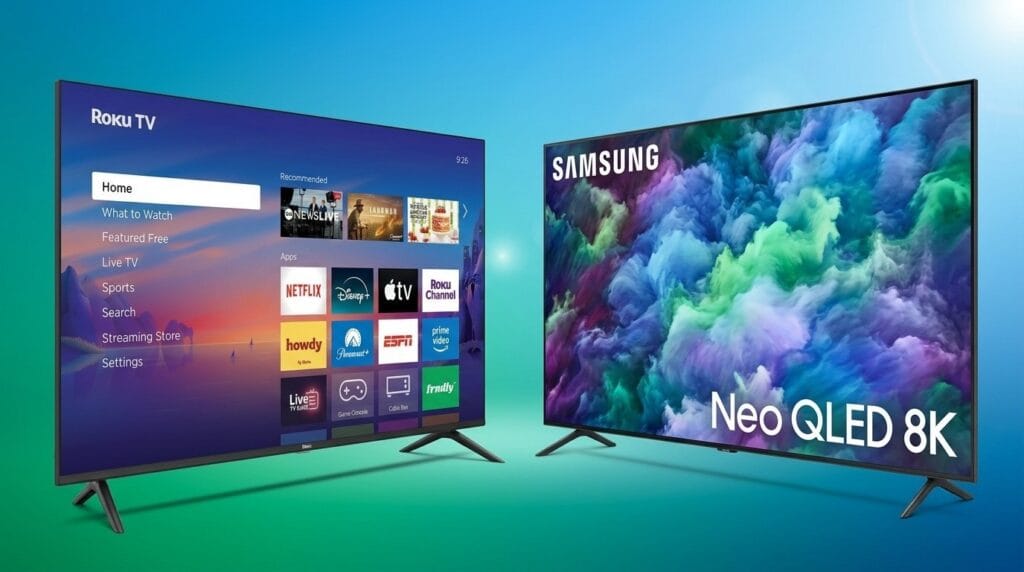
We test how portable projectors—now packing cinema-bright HDR and flexible placement—stack up against TVs’ polished interfaces, tighter ecosystem integration, and dependable picture, and why that trade-off matters for how we actually watch movies today.
We compare the NEBULA Capsule 3 GTV and the Samsung 55 Neo QLED to decide which fits modern movie watching, portable and social or dedicated home theater, focusing on design, picture, smart features, and long-term ownership to guide experience-driven choices.
Portable Cinema

Home Theater

Nebula Capsule 3
- Truly pocketable design with integrated battery for true portability
- Google TV with Netflix officially licensed—stream without an external dongle
- Fast auto-focus, keystone, and obstacle avoidance for quick setup
- Surprisingly good built-in speaker and Bluetooth speaker mode
- Limited brightness (about 200 lumens) — not ideal in well-lit rooms
- Battery runtime only covers a single full-length movie at typical settings
Samsung QN70F
- Exceptional contrast and color accuracy courtesy of Mini LED and AI processing
- Robust smart platform with thousands of channels and advanced upscaling to 4K
- High-refresh and low-latency modes for smoother motion and gaming
- Not portable — mains power and 55-inch panel make it a fixed setup
- Top-tier features push the price well above entry-level TVs
Feature Comparison
| Portable Cinema Nebula Capsule 3 | VS | Home Theater Samsung QN70F |
|---|---|---|
7.5 / 10 | Picture Quality |
9.6 / 10 |
9.5 / 10 | Portability & Battery |
2.5 / 10 |
7.5 / 10 | Sound & Speakers |
9 / 10 |
8 / 10 | Smart Platform & Ecosystem |
9 / 10 |
$399.99 | Current price |
$687.99 |
| Buy for $399.99 | Buy for $687.99 |
Top Portable Projectors: Ultimate Comparison and Honest Review
Design, Setup, and Where They Live
We examine how each device fits into real living patterns. The Capsule 3 GTV is a pocketable cylindrical projector with a 2.5-hour battery and quick, flexible placement for patios, hotel rooms, or small apartments. The Samsung 55″ Neo QLED is a room-defining slab: slim profile, wall or stand mounting, multiple HDMI inputs, and a presence that demands a dedicated viewing zone. We’ll compare build, controls, setup friction, ports, and ambient-light sensitivity — and explain why physical form factors dictate whether we use a product daily or only occasionally.
Pocketable vs room-defining
The Capsule 3 is built like a thick thermos: light, durable, and easy to move. We can drop it into a bag, angle it on a table, or point it at a blank wall and be watching in under a minute. That portability buys flexibility — backyard movies, temporary hotel setups, or multi-use living rooms where a projector avoids a permanent TV footprint.


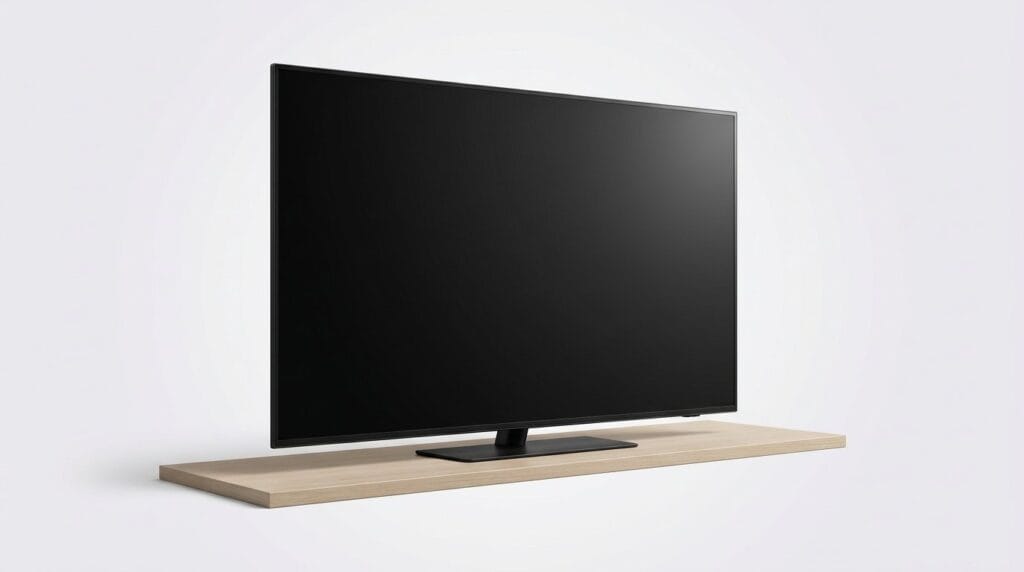
The Samsung 55″ Neo QLED demands commitment. It needs mains power, a stand or wall mount, and a clear sightline. Once installed, it anchors the room. That solidity matters: superior speakers, more ports, and a big, consistently bright image we can rely on night after night in home theater TVs.


Setup friction, controls, and where they live
Picture and Sound: Image Fidelity, Brightness, and Motion
We dig into the viewing experience. The Nebula offers 1080p native projection, large-screen potential (up to 120″) and Dolby Digital audio out of a tiny chassis; it wins for scale and novelty but is limited by lumen output and contrast in bright rooms. The Samsung’s 4K Mini LED panel, NQ4 AI Gen2 processing, Quantum Matrix local dimming and Motion Xcelerator 144Hz deliver higher peak brightness, deeper contrast, smoother motion and richer HDR — critical for cinematic detail and sports. We’ll also compare built-in audio vs. using external sound systems and explain how viewing distance, room light, and content type change what “best” actually means.
Resolution and perceived detail
The Capsule 3 is native 1080p — sharp for a small projector and excellent when you want a giant, camp-style image. But once you push past ~80–90 inches, individual pixels and softer fine detail become noticeable compared with a 55″ 4K panel. The Samsung’s 4K native (plus AI upscaling) keeps textures, subtitles, and small on-screen details crisp at typical living-room viewing distances.


Brightness and contrast
The Capsule 3 (~200 ANSI lumens) is best in dim or dark rooms; in daylight or well-lit living rooms, the image washes out and blacks lift. Samsung’s Mini LED backlight and Quantum Matrix local dimming produce far higher peak brightness and true inky blacks, so HDR highlights pop and shadow detail holds up in brighter environments.


Motion and use-case differences
Motion Xcelerator 144Hz and advanced frame processing on the Samsung mean smoother panning, sports clarity, and lower perceived judder. The Capsule 3 handles film-paced motion well, but fast sports or competitive gaming benefit from the TV’s higher refresh and lower display processing latency versus a gaming monitor workflow.
Audio: built-in vs external
Smart Features, Ecosystem, and Everyday Convenience
We look beyond specs to the software and ecosystem that shape daily use. The Capsule 3 GTV’s Netflix official license and Wi‑Fi make streaming on the go simple; its portable OS and app support are tailored for quick starts but may be slimmer than full TV platforms. Samsung’s Vision AI, Tizen-powered smart platform, Alexa built-in and broader app/ecosystem integration offer deeper smart‑home ties, multiroom casting, and more frequent feature updates. We’ll weigh account portability, voice control, game and low-latency features (input lag, VRR), and long-term software support — because ecosystem friction often decides whether a device becomes our default movie source.
Account, apps, and portability
Because Capsule 3 runs Google TV and comes Netflix‑licensed, we can sign into our streaming accounts and pick up profiles quickly — and cast from phones when we move between rooms or travel. But the projector’s smaller hardware footprint means fewer background services and less headroom for big feature overhauls. Samsung’s Neo QLED gives us a far broader, TV‑style app catalog (and free channel bundles), and those accounts stay glued to the living‑room TV: ideal if this is a long-term hub.
Voice, multiroom, and smart‑home
We prefer Google TV for quick voice searches and phone‑to‑screen casting. Samsung’s Vision AI plus Tizen and Alexa built‑in tie more cleanly into SmartThings, home automation, and multiroom audio setups — it’s the better choice if you want the TV to be the control center.
Gaming, latency, and everyday responsiveness
The Samsung supports VRR, Motion Xcelerator 144Hz modes and low‑latency game modes — real advantages for fast gaming and smooth motion. The Capsule 3 is fine for casual streaming and movie nights, but it won’t match the TV for competitive gaming or ultra‑low input lag.
Long‑term updates and convenience
Value, Use Cases, and Long-Term Ownership
Practical purchase framing
We treat this as a life choice: the Nebula Capsule 3 sells mobility, flexible screen size, and easy social viewing at about a $400 price point. The Samsung 55″ Neo QLED is a purpose‑built living‑room display that requires a larger, up‑front investment but delivers sustained picture quality, gaming features, and smart‑home integration you’ll live with every day.
Total cost of ownership
The Capsule 3’s biggest ongoing cost is opportunity — battery wear and the limits of a 200‑lumen engine mean you’ll replace it sooner if you use it daily outdoors or in bright rooms. It’s low‑power and has no bulky installation costs. The Samsung needs mains power and a permanent spot, but its advanced mini‑LED backlight, AI upscaling, and higher refresh gaming modes avoid the “upgrade sooner” trap for most owners; that typically spreads the higher purchase price over many years of use.
Likely longevity and maintenance
LED light engines and mini‑LED backlights both outlast old lamp projectors; mini‑LED also gives more consistent contrast over time. Projectors are more exposed to dust and can require occasional lens/vent cleaning; the Capsule’s built‑in battery will gradually lose capacity. Samsung’s panel and backlight are low‑maintenance, and the platform gets more frequent software updates and security patches.
Resale and ecosystem value
Large TVs usually fetch higher resale value because they’re a staple household purchase; portable niche projectors have smaller secondary markets. Samsung’s Tizen/Vision AI and smart‑home ties add ongoing value beyond raw picture specs.
Who gets the most value?
Frequently asked questions
Which is better, Portable Projector or TV?
There is no universal winner: Portable Projector fits some buyers and TV fits others. We compare specs, daily use, and trade-offs in this guide so you can match the pick to your budget and workflow, not a single spec sheet.
What is the main difference between Portable Projector and TV?
Portable Projector and TV target overlapping but not identical use cases. The sections above break down design, performance, ecosystem, and value so you can see where each product pulls ahead and where it compromises.
Should I buy Portable Projector or TV first?
Buy the product that removes your biggest daily friction first. If Portable Projector solves your primary pain point, start there; if TV is the bottleneck in how you actually work or play, prioritize it. Many households add the other later.
Is Portable Projector worth it over TV?
Portable Projector is worth the premium over TV when you will use the features that justify the price—extra performance, build quality, or ecosystem lock-in. If those extras go unused, TV usually delivers better value.
Can Portable Projector replace TV?
For some users, yes; for others, no. Portable Projector can cover most tasks TV handles, but gaps in compatibility, accessories, or specialized workflows may still matter. Use our comparison table and verdict to see which gaps apply to you.
Who should choose Portable Projector vs TV?
Choose Portable Projector if its strengths match how you will use it every day; choose TV if you need its specific advantages or a lower entry price. When in doubt, favor the option that fixes your most frequent frustration—not the highest spec on paper.
Final Verdict
We recommend the NEBULA Capsule 3 GTV when mobility, flexible screen size, and casual social viewing matter; compact design and streaming make on-the-go movie nights easy.
But for the sharpest picture, reliable HDR10 playback, low-latency gaming, and a cohesive living-room ecosystem, the Samsung 55″ Neo QLED is our winner in this comparison — it delivers the superior home-theater experience that matters in 2025.

Princess Rioboca is the Lead Editorial Writer at Option Cutter, bringing over seven years of hands-on experience in consumer technology journalism. Specializing in home networking and smart home architecture, she transforms complex technical data into practical, real-world upgrades. Princess personally tests and audits every product she reviews—evaluating real-world Wi‑Fi throughput, cable management durability, and streaming ecosystem stability—to filter out spec-sheet noise. Her rigorous, field-tested insights are designed to give readers transparent, unbiased buying advice on what to purchase, what to skip, and exactly why.