

We put 4K webcams head‑to‑head with top 1080p models to find out if the extra pixels genuinely improve meetings and streams — or if better design, low‑light performance, and smarter software integration make high‑end 1080p the wiser choice.
We pit Logitech’s reliable C920S (1080p) against the premium Brio (4K) to see if higher resolution truly improves everyday calls, streaming, and content creation. We test real-world performance, usability, and value across typical lighting and usage scenarios for most users.
Everyday Calls

We find this webcam to be a dependable, no‑surprises option for most people who need better video than a laptop camera. It nails the fundamentals — solid 1080p image, easy mounting and basic controls — but it doesn’t deliver the expanded detail, HDR, or advanced low‑light benefits of modern 4K models.
Professional Streaming

We see this as a clear step up for anyone who needs sharper video, better dynamic range, or the flexibility to crop and zoom without quality loss. The Brio’s improved light handling, noise‑reduction mics, and software presets make a tangible difference — but those gains come at a premium and aren’t necessary for everyone.
Logitech C920S Webcam
Logitech Brio 4K
Logitech C920S Webcam
Logitech Brio 4K
Logitech C920S Webcam
Logitech Brio 4K
4K vs 1080p Webcams: Is the Upgrade Worth It?
Specs and performance basics: what the numbers actually mean
We start by laying out the measurable differences between the C920S and Brio, because specs drive expectations. On paper the biggest gap is resolution, but frame rate, sensor quality, HDR, and encoding all shape real-world results.
Logitech C920S (1080p) — on paper
The C920S is a classic: 1080p at 30 fps, glass lens, dual mics, and HD light correction. It’s tuned for reliable, low-complexity calls where upstream bandwidth and CPU headroom are limited.


Logitech Brio (4K) — on paper
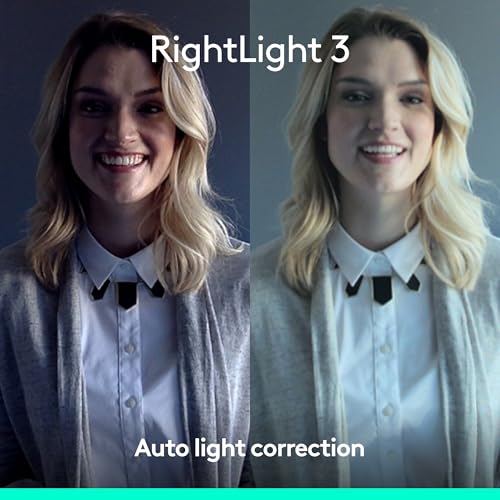
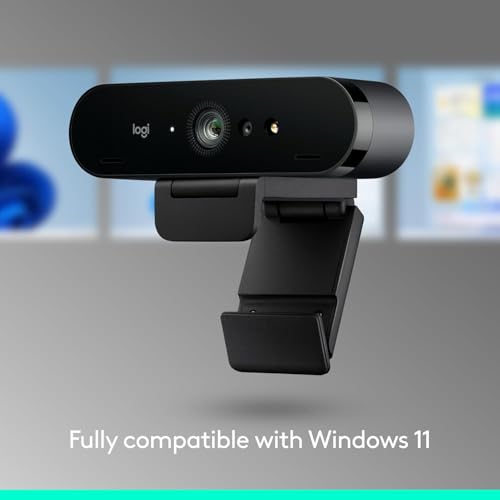
Brio captures up to 4K at 30 fps, includes RightLight/HDR, selectable FOV presets, and richer software controls. Native 4K gives more room to crop or downscale without losing detail.


What the numbers actually mean
We measured these trade-offs with real meetings: for most remote workers 1080p gives reliable quality; creators and streamers who need headroom for cropping or capture will see the clearest benefit from Brio’s 4K.
Feature Comparison Chart
Image quality in practice: detail, noise, motion, and lighting
We evaluate image quality not by pixels alone but by how people look on calls, how well fine details hold up when recorded, and how noise behaves under challenging lighting. In controlled tests the Brio’s 4K capture shows visibly sharper hair, text legibility, and background detail when we crop or reframe footage — a real advantage for creators. But pixel count isn’t the whole story.
Detail and cropping
Brio’s 4K gives meaningful headroom: crop, reframe, or downscale and fine textures remain. That extra resolution matters for product demos, recorded tutorials, or anyone who wants a tight crop without softness.
The C920S delivers clean, usable 1080p: you get good edge sharpness at native framing, and for most video calls that’s all you need. Its 1080p sensor produces a pleasing image without fuss.


Noise and low light
Higher pixel counts can amplify noise if photons per pixel drop. In dim rooms the C920S often wins: larger effective pixels concentrate light, producing cleaner shadows and less chroma grain. Brio’s RightLight/HDR helps salvage low-light scenes, but when ambient light falls below a typical home-office level we still see fine-grain noise across the 4K frame.
Motion, autofocus, and exposure
Both target 30 fps; that’s fine for meetings but limits motion crispness. The C920S’s autofocus and exposure transitions feel conservative and stable for head-and-shoulders shots. Brio is more aggressive — it can overcorrect during quick head turns or when lighting shifts, which draws attention.
Color and dynamic range
Logitech tuning helps both cameras, but we prefer the C920S for natural skin tones in dim indoor light and the Brio for scenes with bright backgrounds or saturated elements. Brio’s HDR-like processing preserves highlights around windows, which improves the user experience in backlit setups.
Practical takeaways:
Design, mic performance, and day-to-day usability
We examine design choices and daily usability, because that shapes real experience more than a spec sheet. The C920S is a familiar, compact plastic unit with a built-in privacy shutter, easy clip, and predictable mounting that fits laptops and monitors; that shutter is a simple UX win for hybrid workers. Brio feels more premium, with a metallic finish and larger profile, and it advertises a wider field of view useful for group calls or showing workspaces, though that can introduce more background clutter.
Build and mounting
The C920S is small, light, and unobtrusive — it sits on a laptop lid without tipping or blocking sensors. The integrated plastic shutter snaps on and off cleanly; we appreciate that simple, mechanical privacy control. The Brio is bigger and heavier, which looks nicer but needs a steady mount and a USB 3.0 port for full functionality.
Microphones and real-world audio
Audio is a major part of perceived quality. The C920S’s clear stereo mics get the job done for one-on-one calls: natural voice, minimal fuss. Brio’s noise-cancelling dual mics do a better job in noisy homes, filtering background chatter and keyboard clatter so listeners don’t strain. For podcasting or recorded narration, Brio’s cleaner pickup is noticeable.
Setup, software, and system demands
Both work plug-and-play with Zoom, Teams, Google Meet, and macOS apps. Logitech’s software (Logi Tune/Options) unlocks manual controls, FOV presets, and firmware updates that improve longevity. Be practical about ports: the Brio’s 4K stream consumes more USB bandwidth (and CPU) — it may need a USB 3.0 port or a powered hub on older machines. The C920S is far less demanding.
Practical take: we prefer the C920S for straightforward reliability and privacy; choose Brio when audio, FOV, and resolution matter to us.
Ecosystem, pricing, and who should buy which camera
Integration and platform fit
We frame decisions around ecosystems, budgets, and workflows. Both cameras work out of the box on Windows, macOS, and the major video apps, but the Brio actually ties into system-level security via Windows Hello — that matters if you live in Windows and want biometric logins. Advanced features (HDR, manual exposure, multiple FOVs, firmware updates) rely on Logitech’s software (Logi Tune / Options+) and sometimes newer OS drivers, so expect occasional admin work for fleets.
Pricing and procurement realities
Price is the practical gatekeeper here. The C920S sits in the budget 1080p tier (roughly $60) and is a predictable, low-friction choice for teams and home workers. The Brio commands a clear premium (roughly $170) for native 4K, HDR, adjustable FOV, and Windows Hello. That premium only pays off if you actually use the extra pixels or the biometric tie‑in.
Competitive context and practical advice
We also weigh alternatives: better lighting, a proper microphone, or inexpensive multi-camera setups (or software upscaling) can narrow the perceptual gap between 1080p and 4K. For provisioning, we recommend buying for workflow rather than spec sheet: Brio when resolution headroom and Windows integration are integral to your process; C920S when consistent, affordable video and minimal IT fuss matter most.
Final verdict
We think 4K is useful, but it isn’t universally necessary. For most people and teams the Logitech C920S is the clear winner — it delivers dependable 1080p image quality, broad software and OS compatibility, a physical privacy shutter, and lower support overhead for IT.
Choose the Brio when you actually produce 4K assets, need native headroom for cropping, require Windows Hello, or want the sharpest image in excellent studio lighting. In today’s market lighting, capture workflow, bandwidth and storage drive perceived quality more than pixel count; 4K increases USB and file demands and often gets downscaled in calls. We’d buy the C920S for daily conferencing and small teams, and the Brio for creators who will use 4K footage daily.

Chris is the founder and lead editor of OptionCutter LLC, where he oversees in-depth buying guides, product reviews, and comparison content designed to help readers make informed purchasing decisions. His editorial approach centers on structured research, real-world use cases, performance benchmarks, and transparent evaluation criteria rather than surface-level summaries. Through OptionCutter’s blog content, he focuses on breaking down complex product categories into clear recommendations, practical advice, and decision frameworks that prioritize accuracy, usability, and long-term value for shoppers.