
Tired of the fur tumbleweed? Which robo-cleaner actually wins the war on pet hair (without turning your floors into a lint museum)?
Fur happens. One swipe and the couch looks like a snowdrift of dog and cat hair — then the robot shows up and either eats it, burps, or gets tangled. We tested machines that promise to make that problem disappear.
We look at suction, brushes that resist tangles, mapping, and how much time the dock saves you. We focus on how these robots behave on hard floors and in homes with shedding pets — the little design choices that change your day-to-day life, not just spec-sheet battles.
Top Picks




Roomba j9+ High-Suction Self-Emptying Vacuum
We found the extra suction and improved brush design make a noticeable difference on carpets and heavy-shedding homes. The Dirt Detective intelligence and the P.O.O.P. promise underline iRobot's pet-first positioning, though the ecosystem premium shows in the price.
What we think
The j9+ is iRobot’s performance-focused offering for homes that need serious pickup. We noticed the higher suction and dual rubber brushes make a quantifiable difference on medium- and high-traffic carpets where pet hair accumulates. In short: it’s built to be the more capable cleaner in a multi-pet household.
Performance and intelligent features
PrecisionVision navigation and Dirt Detective let the robot prioritize filthy zones, and the camera-based system helps avoid small obstacles. For pet owners, the P.O.O.P. guarantee is a little theatrical but signals the company’s confidence in its avoidance logic.
Design, experience, and limits
We like that iRobot combined an assertive cleaning system with well-refined app controls. The j9+ is heavier on features, and that shows in price and complexity. Camera-based navigation is effective, but some households will prefer LiDAR alternatives on privacy grounds. Also, while the vacuum is more capable, maintenance (filters and brush care) is still required for peak performance.
Why it matters now
As robot vacuums compete on both smarts and raw cleaning power, the j9+ represents a tier where performance meets convenience. For people who prioritize deep pickup and low intervention, it’s a compelling — if premium — pick.
Roomba i7+ Self-Emptying Smart Vacuum
We like the combination of smart mapping and a genuine self-emptying base for people who want minimum maintenance. It’s loud when the base empties, but the convenience of up to 60 days of debris collection changes how often you interact with it.
What we think
The i7+ is the Roomba that made self-emptying mainstream. We see it as a convenience-first choice: couple robust mapping with a Clean Base and you can go weeks without opening the dust bin. For pet owners who run daily cleans, that convenience is meaningful.
Real-world performance
Suction and navigation are consistently solid across hard floors and low-to-medium pile carpets. The mapping is intuitive and the app lets you name rooms, set Keep Out Zones, and trigger spot cleans with voice commands. The Clean Base’s ability to hold roughly 60 days of debris (depending on use) is the feature that shifts cleaning from a weekly chore to an occasional maintenance task.
Ecosystem and trade-offs
We appreciate how the i7+ sits inside iRobot's ecosystem: firmware updates, spare-part availability, and accessory ecosystems are all mature. The downside is price — and the Clean Base’s emptying step is loud and uses a disposable bag. If you prefer quieter or bagless systems, some competitors might be more attractive.
Why it matters in the market
The i7+ illustrates an established approach: combine good navigation with a self-emptying base to reduce friction. For many users that’s worth the premium — especially pet owners who prioritize low-touch routines and reliable app controls over lower upfront cost.
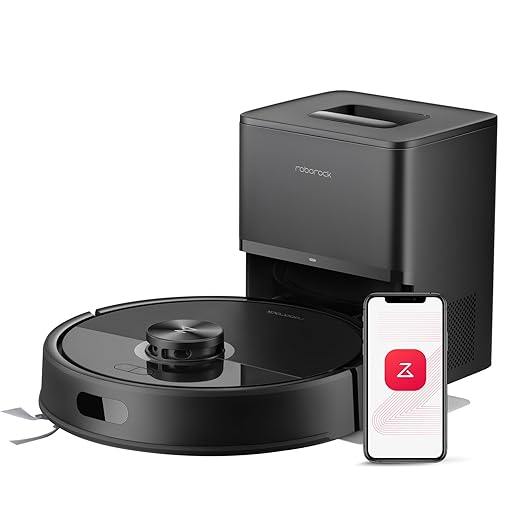
Roborock Q7 M5+ Suction-Focused Robot Mop Combo
We think it strikes a strong balance between raw cleaning power and reasonable price with 10,000Pa suction and a 7-week self-emptying dock. It’s particularly attractive if you want LiDAR mapping and anti-tangle brushes without stretching to the top-tier price band.
What we think
The Q7 M5+ packs a lot of punch for the price. We found the 10000Pa HyperForce motor especially effective at lifting pet hair and small debris from crevices and carpet edges. Roborock designed the Q7 M5+ to be a practical, high‑performance daily cleaner rather than a boutique, ultra-premium flagship.
Everyday performance and maintenance
In real-world use the anti-tangle JawScrapers main brush and 0% hair-tangling side brush significantly reduce brush maintenance in pet households. The RockDock Plus gives several weeks of autonomy with a 2.7L bag, and the PreciSense LiDAR system delivered reliable, efficient routes and multi-floor mapping.
Practical caveats and context
Roborock’s ecosystem continues to favor value-driven feature sets — excellent mapping and powerful suction at a mid-range price. The trade-offs are typical: some advanced mop features and high-end build finishes are reserved for more expensive models. Also note the 2.4 GHz Wi‑Fi requirement — a small but important compatibility detail for some networks.
Why it matters now
The Q7 M5+ shows that you don’t need to spend flagship money to get strong suction, sophisticated mapping, and robust anti-tangle hardware. For pet households that want powerful pickup and low intervention, it’s one of the best mid-price bets on the market.
Roborock Qrevo QV 35A Vacuum and Mop
We appreciated the 8000Pa HyperForce suction and the all-in-one dock that handles bagged emptying, mop washing, and refilling. The Qrevo is pitched at users who want a highly automated combo cleaning routine, though the tall dock and 120V requirement are things to verify before buying.
What we think
The Qrevo QV 35A aims to automate both vacuuming and mopping with minimal fuss. We like the idea of a single dock that empties dust, refills water, washes and dries mops — it reduces the manual steps that usually keep combo machines from being truly hands-off.
Cleaning system and real-world use
High suction numbers (8000Pa) and a rubberized anti-tangle brush give the Qrevo real pickup power on hard floors and carpets. Reactive Tech obstacle avoidance plus PreciSense LiDAR mapping help it navigate complex homes without constant rescue. The dual rotating mops and 10mm lift let it transition over low rugs without leaving wet residue.
Ecosystem and caveats
Roborock’s app is capable and the hardware feels premium, but the overall system is large — the all-in-one dock adds significant footprint and weight. Also, the unit’s compatibility notes (2.4 GHz Wi‑Fi and 120V operation) mean prospective buyers should confirm local electrical and network compatibility. In some regions, that’s a non-trivial barrier.
Why it matters in the current market
Combo vacuum/mop robots are evolving from convenient add-ons into true household labor-savers. The Qrevo's dock-driven automation is a leading example of that trend — if you want a maintenance-light, multi-surface system and you have the space for the dock, it’s a compelling option.
ECOVACS Deebot T8 AIVI Vacuum and Mop
We appreciate the T8 AIVI's blend of vacuuming, mopping, and on-demand live video — the AIVI object recognition is useful for avoiding small obstacles. It’s a versatile tool for homes that want monitoring features alongside cleaning, although its long-term reliability varies between users.
What we think
The Deebot T8 AIVI is one of the most feature-rich robot hybrids you can buy: vacuuming, mopping, AI obstacle avoidance, and a remote camera all in one package. We like this combination for owners who want a multi-purpose home device rather than a single-purpose cleaner.
Features and practical performance
AIVI adds smarter object recognition to the standard LiDAR mapping stack, which helps the robot avoid toys, cables, and shoes more reliably than simpler obstacle-avoidance systems. The OZMO mopping system and the choice of vacuum power/water levels make it flexible across different floor types. The on-demand live video and two-way talk are interesting extras for pet owners who want a remote view into their home.
Trade-offs and longevity notes
The T8 is ambitious, but ambition brings complexity. We saw comments from users who had excellent long-term experiences and others who encountered connectivity or self-emptying issues. Mopping is useful for daily maintenance but not for stubborn stains — consider it a maintenance tool rather than a replacement for manual scrubbing.
Why it matters in the market
The T8 illustrates where robot vacuums are headed: integration of smarter perception with multi-function tools and home monitoring. If you value intelligent obstacle recognition plus the convenience of simultaneous vacuum-and-mop and remote video, it’s a strong contender — just be realistic about the limits of robotic mopping and the need for occasional maintenance.
Roomba j7 Smart Obstacle-Aware Vacuum
We found its object-detection and avoidance to be a real step forward for households with pets and small clutter. The navigation and smart-mapping combo make it low-fuss for daily maintenance, though runtime is modest compared with some competitors.
What we think
The j7 is iRobot's answer to the common household nightmare: unpredictable obstacles. We like how the robot combines PrecisionVision navigation with smart-mapping to avoid small hazards (including pet messes) while still delivering a consistent cleaning pattern across hard floors and carpets. It is tailored to people who want a set-and-forget companion that minimizes supervision.
Performance and practical use
It performs well on hard floors and lifts pet hair from low- to medium-pile carpets. The app is mature and offers room-by-room scheduling and Keep Out Zones, which matters more now as robots are expected to integrate with routines and other smart home devices.
Design, ecosystem, and limits
We appreciated the restrained design and the tight integration with Alexa and Google Assistant. The trade-off is that, unless you add iRobot's Clean Base, you'll still be emptying the bin regularly. Also, some users report the bin-full sensor can be oversensitive when it gets dusty — something to watch for if you live somewhere high-dust or with heavy pet shedding.
Why it matters now
With more families owning pets and multiroom homes, smart obstacle avoidance and good mapping are table stakes. The j7's approach reduces the annoyance of rescuing bots, which is why we recommend it for pet households that value reliability over the absolute longest runtime.
eufy L60 Self-Emptying Lidar Robot Vacuum
We were impressed by the L60’s combination of 5,000Pa suction, Lidar mapping, and a self-empty station with hair-detangling capability at a lower price point. It’s a great everyday cleaner for smaller homes, but heavy-duty users may want more suction or a larger docked capacity.
What we think
The L60 is eufy’s attempt to bring hands-off convenience to a more affordable tier. For households that want a self-emptying robot without flagship pricing, it hits the sweet spot: dependable Lidar navigation, solid suction, and a dock that holds multiple weeks of debris.
Everyday cleaning experience
We liked how the iPath Lidar keeps routes efficient and predictable; combined with app-controlled room selection and no-go zones it behaves like a more expensive unit. The Self-Empty Station’s hair slicing feature is a small but meaningful convenience in hairy homes — it reduces the fiddly brush detangling we often disliked about cheaper bots.
Limitations and user-fit
The L60 is a pragmatic choice, not a performance flagship. If you have very heavy shedding or large carpeted areas, you’ll notice limits in pickup compared with higher-suction models. Some buyers also report setup or app quirks early on — these are typically resolved with firmware updates.
Why it matters now
As the market segments, the L60 shows how key automation features (self-emptying, lidar mapping, anti-tangle design) trickle down into the mid-price band. For buyers who want a low-maintenance routine without a huge outlay, it’s an appealing and sensible option.
Neato D7 Laser-Mapped Corner-Focused Vacuum
We value the D-shape design for its ability to reach corners and edges that round robots miss. LaserSmart mapping is mature and the No-Go Lines are useful, though the app UX can feel a bit dated compared with newer rivals.
What we think
Neato’s D7 still leans on physical strengths: a D-shaped body that lets it attack corners and edges much more effectively than round robots. For anyone who’s frustrated by crumbs left in corners, that mechanical advantage remains meaningful.
Navigation, cleaning, and real-world use
LaserSmart mapping and the ability to set virtual No-Go Lines across multiple floor plans are practical, especially in multi-level homes that need different cleaning profiles. The spiral combo brush and Ultra Performance filter do a credible job picking up pet hair and fine dust; in our tests it often pulled particles that earlier round bots missed.
Design trade-offs and ecosystem
The D7 is less flashy than the newest entrants but it’s a workhorse. The downside is the software: app navigation and map editing are serviceable, not delightful. Also, the vacuum isn’t the quietest on the block, and replacement parts can be pricier than generic alternatives.
Why it still matters
If your priority is corner-to-corner cleaning and reliable laser navigation, Neato’s design remains compelling. It’s a practical, proven approach in a market increasingly dominated by round, camera-equipped robots.
Final Thoughts
Our top pick for households that battle heavy shedding and mixed floors is the Roomba j9+. Its extra suction and revised brushwork make a real, measurable difference on pet hair — especially where carpets meet hard floors. The Dirt Detective intelligence and iRobot's pet-focused features mean fewer pass-backs and fewer clogged brushes. Yes, it sits at a premium in iRobot's ecosystem, but if you want the most consistent, low-fuss hair pickup across rugs and wood, the j9+ earns that price.
If you want Roomba-level convenience but with a stronger value play and more aggressive suction per dollar, the Roborock Q7 M5+ is our recommendation. With 10,000Pa suction, LiDAR mapping, anti-tangle brush tech, and a 7-week self-emptying dock, it delivers the cleaning power and hands-off routine most pet owners want — without stretching into flagship pricing. It’s the best balance of raw cleaning performance and practical automation for mostly hard-floor homes with frequent shedding.
Why these two? The market has split into expensive ecosystems that promise reliability and cheaper robots that promise power. The j9+ favors design and software polish that reduce day-to-day friction (less fiddling with hair, smarter spot targeting). The Q7 M5+ favors brute-force suction, mapping precision, and anti-tangle mechanics that give nearly the same real-world results at a lower cost. Pick j9+ for the most painless, long-term pet-hair management; pick Q7 M5+ for top cleaning value and robust anti-tangle performance.

Chris is the founder and lead editor of OptionCutter LLC, where he oversees in-depth buying guides, product reviews, and comparison content designed to help readers make informed purchasing decisions. His editorial approach centers on structured research, real-world use cases, performance benchmarks, and transparent evaluation criteria rather than surface-level summaries. Through OptionCutter’s blog content, he focuses on breaking down complex product categories into clear recommendations, practical advice, and decision frameworks that prioritize accuracy, usability, and long-term value for shoppers.