We ask: with smartphones now taking over more than 90% of snapshots, can a pocketable compact still beat a flagship phone on image quality, tactile controls, and lens choice — and why that matters for our design sensibilities, workflow, and creative control in an ecosystem-driven market?
We compare the Sony RX100 VII, sold both as DSCRX100M7 and in a bundle, with modern smartphone cameras in this product comparison to decide which suits different users and workflows.
Pocket Powerhouse

Vlog Ready

Sony RX100 VII Premium Compact Camera
Sony Cyber-Shot RX100 VII Bundle Kit
- Excellent autofocus and real-time eye/subject tracking
- Wide 24–200mm range in a true pocketable body
- Strong still-image quality from a 1-inch stacked sensor
- 4K video with useful pro-level options and mic input
- Small controls and menu depth can be fiddly
- High price for a compact; low‑light results lag larger sensors
Feature Comparison
| Pocket Powerhouse Sony RX100 VII Premium Compact Camera | VS | Vlog Ready Sony Cyber-Shot RX100 VII Bundle Kit |
|---|---|---|
8.5 / 10 | Image quality |
8.5 / 10 |
9.5 / 10 | Autofocus & tracking |
9.5 / 10 |
9 / 10 | Portability & handling |
8.8 / 10 |
8.5 / 10 | Video performance |
8.4 / 10 |
$1,498.00 | Current price |
$1,549.95 |
| Buy for $1,498.00 | Buy for $1,549.95 |
Form factor, controls, and everyday usability
Pocketability and weight
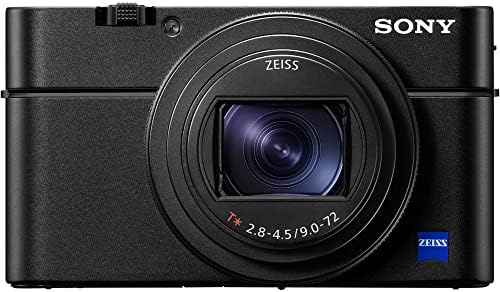
We found the RX100 VII really nails the “pocket camera” promise among point-and-shoot models. The metal body and compact footprint make it far more hand-friendly than an interchangeable lens camera — the standalone DSCRX100M7 weighs about 275 g and slips into a jacket pocket without a second thought.


The bundle kit (DSC‑RX100M7 with extra battery, case, 64GB card and accessories) is still small, but the extras add bulk to a day bag and reduce the pure “always-with-us” quality compared with carrying only a cell phone. If you plan to carry the camera as your daily device, the bundle nudges you toward a small case.

Controls, one‑handed operation, and speed
Physical dials and a customizable control ring make manual exposure fast in a way phones can’t match—once we set them up, changing shutter or aperture is immediate and tactile. The built-in 24–200mm zoom wins on framing: optical reach changes composition instantly, instead of relying on aggressive digital crop like most phones.
Battery life, accessories, and workflow friction
Battery is the biggest everyday trade‑off. The NP‑BX1 packs limited capacity (around 1240 mAh), so we routinely carry a spare for long shoots. Moving files off the RX100 to a memory card reader is another friction point: Wi‑Fi transfer works, but it’s slower and clunkier than snapping on a phone and sharing.
Image and video performance: sensor, lens, AF, and stabilization
Here we dig into the hardware: the RX100 VII’s 1.0-inch stacked CMOS sensor, ZEISS 24–200mm equivalent lens, 20.1MP output, and Sony’s class-leading autofocus and 4K video capabilities. We compare these technical strengths to flagship iPhone and Android camera systems that rely on computational processing.
Sensor and low‑light IQ
The RX100 VII uses a 1.0‑inch stacked CMOS sensor (20.1MP). That larger photosite area gives us cleaner high‑ISO files and more usable dynamic range than most phones when light gets scarce — a key reason to keep a dedicated compact camera in your bag.

Lens, telephoto reach, and depth of field
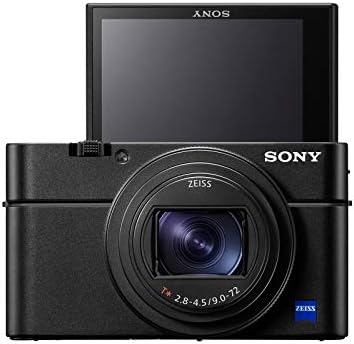
The ZEISS 24–200mm (f/2.8–4.5) gives a true 8x optical zoom — framing changes are immediate and lossless. Compared with phone telephoto modules on modern Samsung phones, the RX100 produces more consistent image quality across the range and noticeably shallower background separation at matched framing because of the larger sensor.
Autofocus, rolling shutter, and motion handling
Sony’s stacked sensor + BIONZ X enables 0.02s AF, 357 phase‑detect points, real‑time tracking and Eye‑AF. For fast action the RX100 is more reliable than phones that rely on software subject re‑projection. The sensor’s fast readout also reduces rolling‑shutter skew versus many smartphone sensors, helping fast pans.
Stabilization and video workflow
Optical SteadyShot + Active Mode for 4K makes handheld long‑zoom clips usable without a gimbal. The RX100 also offers full‑pixel 4K readout, S‑Log3, and a microphone jack — features phones don’t match for controlled video. Phones still win at ultra‑stable, short clips with EIS+computational crop and instant social uploads, but for lengthy zoomed takes and consistent AF tracking, the RX100 VII is the better tool.


Connectivity, software, and ecosystem fit — how they integrate with our lives
We analyze end‑to‑end workflows: how each option fits into our social, cloud, and editing ecosystems. Smartphones win at instant sharing, in‑device editing, and scene‑specific computational modes, while the RX100 VII plugs into Sony’s Imaging Edge, supports higher‑bitrate video workflows, and benefits from third‑party accessories and physical controls. We consider tethering, Wi‑Fi transfer speed, app reliability, firmware updates, and the friction of importing RAW files versus tapping to post.
Instant sharing vs deliberate capture
Phones are built around one‑tap sharing: capture, crop, add filter, post. That lowers friction so we actually share more. The RX100 VII requires an extra step — transfer or tether — which translates to fewer impulse uploads but higher‑quality outputs when we do commit.
Tethering, transfer, and app reliability
Sony offers Wi‑Fi/Bluetooth transfer and Imaging Edge Mobile for remote control and quick image pull. In practice, Wi‑Fi transfers are slower and each session is fiddlier than the always‑on phone pipeline. The DSC‑RX100M7 bundle helps by including a card reader and spare battery, which reduces downtime and speeds import.


Editing, RAW, and video workflows
The RX100 VII’s RAW files and XAVC‑S/S‑Log3 video feed into Lightroom, Premiere, or DaVinci Resolve for true color grading and noise control — that matters if we’re making polished uploads or longform video. Phones trade that depth for on‑device computational corrections that make everyday snaps look great without desktop editing.
Ecosystem, accessories, and updates
Sony’s camera sits in a prosumer ecosystem: external mics, tripods, capture cards, and regular firmware bumps that unlock features or improve AF. Smartphones get more frequent computational improvements via OS/app updates, but can’t match the RX100’s physical controls or high‑bitrate outputs. Which we choose depends less on peak image quality and more on whether we want immediate sharing or a workflow that rewards deliberate editing.
Value, competitive context, and who should buy which
Market position and price
We place both the standalone Sony RX100 VII and the bundled DSC‑RX100M7 kit squarely in the premium compact tier (~$1,698). That price buys a 1‑inch stacked sensor, class‑leading AF, and a genuine 24–200mm zoom — capabilities phones can’t fully match. But it’s a steep ask when flagships deliver multi‑lens versatility, periscope telephotos, and instant sharing for far less friction.
What the bundle actually buys you
The DSC‑RX100M7 kit softens the purchase: a 64GB card, spare NP‑BX1 battery, case, card reader, tripod, and software make the camera ready out of the box and reduce accessory spend and downtime. That’s real value if you’d otherwise buy those items separately.
Phone vs RX100 in plain terms
Smartphones win for convenience, computational low‑light, and one‑tap publishing. The RX100 VII wins for dynamic range, zoom reach without digital trickery, mic input, higher‑bitrate 4K, and tactile controls that reward deliberate shooting. The extra import/tethering steps are the price of higher‑quality assets.
Alternatives to consider
Larger mirrorless bodies give superior low‑light and lens options at the cost of size and budget. Cheaper compacts save money but lose AF speed and video features.
Who should buy which
We’d choose the bundle if we want a true pocket tool that’s ready to shoot out of the box; we’d stick with a flagship phone if zero‑friction sharing and always‑on convenience are our top priorities.
Frequently asked questions
Which is better, Compact Camera or Smartphone Camera?
There is no universal winner: Compact Camera fits some buyers and Smartphone Camera fits others. We compare specs, daily use, and trade-offs in this guide so you can match the pick to your budget and workflow, not a single spec sheet.
What is the main difference between Compact Camera and Smartphone Camera?
Compact Camera and Smartphone Camera target overlapping but not identical use cases. The sections above break down design, performance, ecosystem, and value so you can see where each product pulls ahead and where it compromises.
Should I buy Compact Camera or Smartphone Camera first?
Buy the product that removes your biggest daily friction first. If Compact Camera solves your primary pain point, start there; if Smartphone Camera is the bottleneck in how you actually work or play, prioritize it. Many households add the other later.
Is Compact Camera worth it over Smartphone Camera?
Compact Camera is worth the premium over Smartphone Camera when you will use the features that justify the price—extra performance, build quality, or ecosystem lock-in. If those extras go unused, Smartphone Camera usually delivers better value.
Can Compact Camera replace Smartphone Camera?
For some users, yes; for others, no. Compact Camera can cover most tasks Smartphone Camera handles, but gaps in compatibility, accessories, or specialized workflows may still matter. Use our comparison table and verdict to see which gaps apply to you.
Who should choose Compact Camera vs Smartphone Camera?
Choose Compact Camera if its strengths match how you will use it every day; choose Smartphone Camera if you need its specific advantages or a lower entry price. When in doubt, favor the option that fixes your most frequent frustration—not the highest spec on paper.
Final verdict
After testing and comparing the RX100 VII against what flagship camera phones deliver in 2026, we conclude there is a clear winner for each use case: for image quality, zoom, and manual control the RX100 VII is the better tool; for everyday convenience, instant sharing, and computational tricks, a modern smartphone wins. The RX100 VII’s 1‑inch stacked CMOS sensor, ZEISS 24–200mm optical reach, tactile dials, and reliable low‑light and video behavior give professionals and serious enthusiasts predictable, highest‑quality results — especially when you need real optical zoom and granular exposure control. The bundled kit (extra battery, 64GB card, case) makes it a complete, travel‑ready system that lands on our recommended side of the scale.
That said, smartphones today offer seamless ecosystem integration, superior AI-driven HDR/night modes, and unparalleled always‑with‑you convenience. If your priority is social sharing, battery‑saving simplicity, and a device you never leave behind, keep the flagship phone. Our actionable recommendation: buy the RX100 VII (or the bundled kit) when you value image fidelity and creative control; otherwise, stick with a flagship smartphone. Which side matters more to your daily workflow? If peak image quality and optical zoom matter most, the RX100 VII kit is the practical, future‑proof choice.

Princess Rioboca is the Lead Editorial Writer at Option Cutter, bringing over seven years of hands-on experience in consumer technology journalism. Specializing in home networking and smart home architecture, she transforms complex technical data into practical, real-world upgrades. Princess personally tests and audits every product she reviews—evaluating real-world Wi‑Fi throughput, cable management durability, and streaming ecosystem stability—to filter out spec-sheet noise. Her rigorous, field-tested insights are designed to give readers transparent, unbiased buying advice on what to purchase, what to skip, and exactly why.