
Why the Price Tag Isn’t the Whole Story
We all love a bargain, but cheap routers often hide costs that only appear after purchase. The upfront saving feels smart, yet day-to-day performance, flaky hardware, and sparse updates compound into frustration.
In our view, a router isn’t a throwaway gadget — it’s the backbone of a home or small office network. Choices about components, firmware policy, and ecosystem fit shape every interaction with the internet that follows — see home router basics.
Below we outline the factors that matter: durability and build, real-world throughput and latency, network security and patching, features and interoperability, and the true total cost of ownership. We help you buy wiser.

Hardware, Build Quality, and Component Choices
Where manufacturers cut corners — and why it matters
We’ve unboxed enough bargain routers to recognize the same shortcuts: thin, brittle plastics and flimsy mounting tabs; tiny, cramped PCBs; no heat sinking; a lightweight external power brick or a soldered, cheap regulator. Those choices save a few dollars in production but cost users in reliability. A chassis that traps heat or snaps at the first wall-shelf install turns an otherwise fine radio into a short‑lived headache.
How that fails in the field
In everyday use, cheaping out shows up as:
We’ve seen a weekend‑sold bargain die after a summer of heavy gaming, while a slightly pricier model hums along through years of updates. These failures translate directly into replacement costs, time lost fixing networks, and frustrated users.

Single‑chip vs multi‑chip designs, and why board layout matters
Low‑cost vendors often use SoC‑centric designs where one chip handles CPU, radio, and switching. That’s compact and cheap, but it concentrates heat and limits simultaneous throughput. Multi‑chip designs separate functions (dedicated radios, offload engines) — they’re costlier to make but handle sustained loads and real‑world congestion much better.
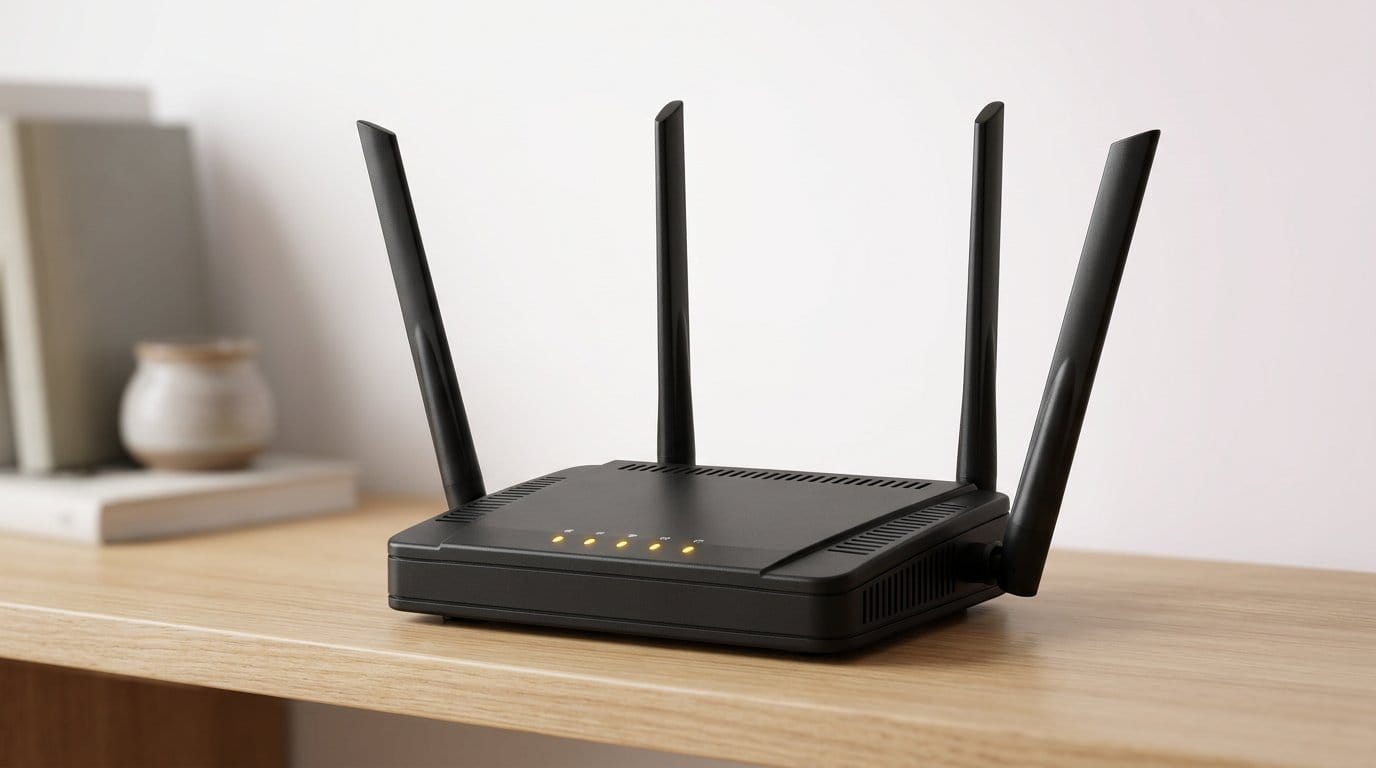
Antenna design and PCB layout are equally important. External, adjustable antennas and clear RF traces give far better range and stability than hidden antenna arrays jammed next to power regulators. If the manufacturer shows antenna gain specs or internal board photos, that’s usually a good sign.
Practical checks — what we recommend looking for
Next, we’ll dig into how these hardware realities interact with real‑world performance — throughput, latency, and what happens under congestion.
Performance in the Real World: Throughput, Latency, and Congestion
Lab numbers vs. sustained throughput
Specs on a box — “AX3000” or “up to 3 Gbps” — are useful shorthand, but they’re often measured with a single, idealized TCP stream in a quiet lab. In our homes, traffic is messy: multiple Wi‑Fi clients, simultaneous uploads, and latency‑sensitive packets (gaming, video calls, VoIP). A $50 router can post impressive peak numbers in a test but collapse when asked to keep ten streams, a VPN tunnel, and a cloud backup running at once.
Latency, bufferbloat, and perceived slowness
What kills the user experience isn’t always raw speed — it’s latency spikes. When a cheap router’s small buffers fill and there’s no smart queue management, uploads will saturate the link and every interactive app will lag. We’ve seen families with nominally fast connections complain of stuttering video calls while a background upload runs — classic bufferbloat. Look for routers that support SQM/FQ‑CoDel or have vendor QoS implementations that actually address bufferbloat.

CPU headroom, NAT, and VPNs
Routing, NAT, firewall inspection, and encrypted VPNs are CPU work. Low‑end SoCs can route wirelessly fine until you enable a site‑to‑site VPN or a heavy firewall rule set — then throughput drops dramatically. Higher‑end models (or those with hardware NAT/VPN acceleration or AES instruction sets) maintain throughput while doing encryption and packet inspection. If you use a home VPN, cloud gaming, or multiple simultaneous streams, CPU specs matter — not just radio specs.
Mesh backhaul and multi‑device QoS
Cheap mesh kits often share a single radio for client access and backhaul, effectively halving usable bandwidth under load. Tri‑band or wired backhaul designs avoid that trap by dedicating a channel (or Ethernet) for node-to-node traffic. Equally important: look for granular QoS settings that let us prioritize meeting‑critical packets (VoIP, gaming) while background transfers yield.
Practical tips we use
Next, we’ll examine how firmware and update policies amplify—or mitigate—these performance issues.
Security, Firmware Updates, and the Cost of Neglect
We just looked at how poor hardware amplifies performance problems. The software side can be just as consequential. A fast radio with abandoned firmware is a fresh attack surface — and that’s where cheap routers tend to fail the hardest.
Why updates matter, not just features
A router is the single point every device on our network trusts. When vendors stop issuing security patches, known vulnerabilities stay exploitable forever. That means phones, laptops, smart locks, and baby cams downstream can be exposed even if those devices themselves are patched. In practice we’ve seen vulnerable routers used as persistent footholds for botnets, credential harvesting, or traffic interception — issues that can lead to identity theft or expensive recovery efforts.
The operational cost of an unpatched router
Neglect costs time and money, not just risk. Common real‑world impacts include
These aren’t hypothetical — they’re the unglamorous tasks that eat evenings and tech budgets.
Transparency, open source, and third‑party fixes
Not all routers are equal when it comes to maintainability. Some manufacturers publish changelogs, honor GPL source releases, and stay transparent about CVE responses. Others ship firmware with closed binaries or Broadcom‑style drivers that block third‑party firmware like OpenWrt or Tomato — removing an important safety valve for power users.
Models such as the Linksys WRT line historically perform better in the community patching ecosystem; many budget staples (think entry‑level TP‑Link or NETGEAR models) are cheaper upfront but frequently lack that same third‑party support.
Practical steps we use and recommend
Software support is as much a product feature as antenna count. In a market that prizes low margins, ongoing patching is often the first thing cut — and that choice quickly becomes our problem. Later we’ll examine how ecosystem and feature decisions compound these software risks.
Ecosystem, Features, and Interoperability
We’ve talked about raw silicon and security; now we look at the software universe that determines whether a router is pleasant to live with. Ecosystems — the app experience, cloud services, mesh compatibility, and smart‑home integrations — are where the long‑term value gets made or lost.
App and cloud experience: friction vs. polish
Setup is the first real interaction we have with a router, and bad first impressions stick. Premium systems like Google Nest WiFi or Eero lean on smooth mobile apps and cloud‑backed diagnostics that make onboarding feel simple. Cheap models often ship a clunky web UI or half‑baked apps that force us into manual IP juggling or flaky firmware updates. The difference matters daily: in one household we tested, swapping a router with a robust app cut our troubleshooting time in half.
Advanced features and the paywall problem
Vendors monetize ecosystems differently. Some include parental controls, VPN clients (WireGuard/OpenVPN), and intrusion detection out of the box; others hide those capabilities behind recurring subscriptions. Netgear’s Armor and Eero Secure are familiar examples of this trend. That changes the calculus — a low entry price can balloon once you want critical protections or granular controls.
Mesh compatibility and future expansion
Cheap routers may insist you buy the exact same model to extend coverage, or they offer proprietary “repeaters” that perform poorly. Brands that design with mesh in mind (Deco, Orbi, UniFi/AmpliFi) let us scale predictably and mix nodes without constant reconfiguration. If you anticipate a home office or a backyard studio, that flexibility saves time and replacement buys later.
Smart‑home integration and interoperability
Smart devices proliferate fast. Routers that support standards (mDNS handling, IPv6, Matter gateway friendliness) and offer device‑level controls make smart homes safer and more reliable. We’ve seen inexpensive routers choke on dozens of IoT endpoints, causing intermittent disconnections that are maddening to debug.
Buyer’s checklist: quick, actionable checks
Ecosystem choices shape daily experience more than raw throughput. As our homes accumulate more devices and services, that software scaffolding determines whether a router is an appliance or a recurring annoyance.
Total Cost of Ownership: Hidden Expenses and Opportunity Cost
We can argue about specs all day, but the true test is the ledger. Here we quantify the real, often invisible costs that make a bargain router pricier over time — and give a simple model to decide whether to splurge.
The usual suspects: replacement, time, and outages
Cheap routers tend to fail or feel obsolete faster. In practice we see lifespans of ~2–3 years for sub‑$70 models versus 4–7 years for well‑built midrange systems. That means more replacement purchases, more time spent configuring, and more flaky days.
Quick examples
Energy and subscriptions — small numbers add up
Routers run 24/7. A 10 W device uses ~88 kWh/year; a thirstier 20 W one uses ~176 kWh. At $0.14/kWh that’s roughly $12–$25/year. Add recurring security or cloud fees (Netgear Armor, Eero Secure): $30–$100/year. Over five years those line items become meaningful.
The value of features you don’t have
Missing features — stable mesh, built‑in VPN, secure remote access, robust VLAN controls — are opportunity costs. If a cheap router forces you to buy a separate mesh kit (e.g., an extra Orbi or Nest WiFi node) or a third‑party VPN box, you’ve effectively paid double. In one household we tested, a $70 router’s dead zones required a $150 mesh extender within a year.
A simple TCO model you can use
Total Cost of Ownership ≈ Purchase cost + (Replacements over period) + Energy cost + Subscription fees + Time cost (troubleshooting + outages) + Cost of added hardware for missing features.
Example (5‑year window)
Per‑device: divide yearly cost by number of connected devices. With 20 devices, cheap = $3.60/device/yr; midrange = $4.65/device/yr — the premium buys reliability and fewer headaches.
Rules of thumb
With these numbers in mind, we can move to practical buying advice and wrap up how to avoid false economies.
Buying Smarter: When Cheap Is False Economy
We’ve shown that lowest price often shifts costs onto us via time, interruptions, security risk, and rapid replacement. Signs a router is false economy: opaque update policy, questionable components, thin warranties, poor real‑world throughput, and weak ecosystem compatibility. These matter now because homes rely on more devices, higher real‑time demands, and longer lifecycles than budget models assume.
When shopping, prioritize clear firmware support, independent real‑world reviews, multi‑year warranties, and ecosystem fit over headline specs. Balance upfront cost against expected lifespan and experience — spend where it avoids friction. Our call: buy smarter, not cheapest — browse our how-to guides.
Frequently asked questions
What is the main point of “Why Cheap Routers Cost More in the Long Run”?
This piece explains where why cheap routers cost more in the long run matters in real buying decisions—not just headline specs. We focus on trade-offs, who benefits most, and what to verify before you spend.
Who should read this why cheap routers cost more in the long run guide?
Read it if you are actively shopping, upgrading, or trying to separate marketing claims from day-to-day use. Skip it if you already own the gear and are not planning a change this season.
What changed recently around why cheap routers cost more in the long run?
Prices, firmware, and feature tiers shift quickly in this category. We call out what is new enough to affect your decision and what is incremental hype you can safely ignore.
How should I use this editorial when buying?
Treat it as context before you compare models: note the risks and priorities here, then cross-check specs and current pricing on the picks that match how you actually use the product.
What is easy to get wrong about why cheap routers cost more in the long run?
Buyers often overweight one spec—brightness, speed, or brand—and underweight fit for their room, ecosystem, or warranty support. We flag the mismatch we see most often in reader questions.
Where should I go next after reading?
Use the related comparisons and top picks linked near the end of this article for model-level shortlists, then confirm return policies and compatibility with the devices you already own.

Iqra Jumar is Option Cutter's editorial writer. She writes practical editorials and buyer guides that focus on real-world upgrades—better Wi‑Fi, cleaner cable setups, smarter streaming, and everyday fixes—not spec-sheet noise alone. Her work helps readers decide what to change now, what to skip, and why.