
Can a speaker make the crowd forgive your playlist choices? These bangers wear the bass like a badge.
Bass is the personality of every party. Walk into any backyard, beach, or parking-lot get-together and you know within seconds if the sound will land. Good bass makes people move. Bad bass makes people cover their ears.
Top Picks
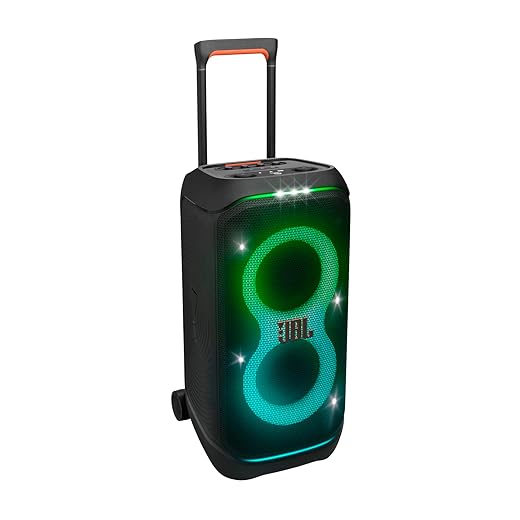




JBL PartyBox Stage 320 — Rolling Powerhouse
A road-ready party speaker that balances thumping low end, long battery life, and an attention-grabbing lightshow. It’s designed for people who want a single unit they can wheel into any outdoor or indoor event and know the crowd will hear and feel the bass.
What it is and who it’s for
We see the Stage 320 as JBL’s attempt to marry pro-level party sound with real-world portability. It’s a bulky, feature-packed column: dual 6.5" woofers and dome tweeters tuned for impact, a multi-pattern lightshow, mic and guitar inputs, and a replaceable battery system meant to keep multi-hour events rolling without a power outlet.
Key features that matter
Why this matters now
We’ve seen portable party speakers either prioritize sound or portability — rarely both. The Stage 320 acknowledges that buyers want event-ready performance without committing to a full PA truck. The replaceable battery concept changes the practical equation: if you’re hosting back-to-back events or a long day outdoors, swapping a battery is easier than hunting for AC. The lightshow and mic/guitar inputs also position the unit as a single-box solution for backyard DJs and karaoke hosts.
Limitations and practical advice
JBL Boombox 2 — Monstrous Bass, All-Day Play
A surprisingly portable unit that focuses on weighty, tight low end and day-long battery life. It’s built to be taken poolside or on trips, and its IPX7 rating means we worry less about weather than most competitors.
What stands out
The Boombox 2 doubles down on what made the original appealing: a portable box that delivers club-like low end without needing mains power. We appreciate how the bass feels controlled rather than just loud — it’s a speaker that emphasizes impact and musicality in equal measure.
Features you’ll use
Competitive context
In a market crowded with lightweight portable options, the Boombox 2 occupies the upper-left quadrant: heavy and powerful. Compared with smaller PartyBoost-enabled models, it provides deeper bass and louder SPLs without distortion. For buyers who want a workhorse that survives weather and keeps the party going, it’s a top pick.
Considerations before buying
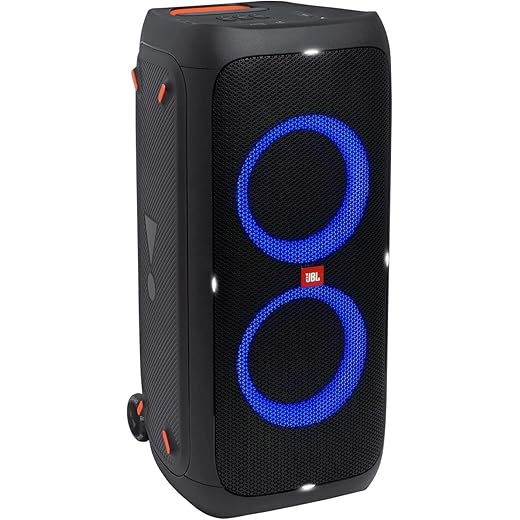
JBL PartyBox 310 — 240W Portable Entertainer
It delivers loud, balanced 240-watt output with an engaging lightshow and long battery life, making it a reliable choice for backyard raves and family parties. The speaker is intuitive and durable, so it’s easy to recommend for people who want big sound without a complicated setup.
The practical entertainer
In our experience, the PartyBox 310 sits squarely in the zone of "big sound without a crew." It’s rated at 240 watts and produces a very musical output that scales well from small living-room gatherings to open patios. The lightshow is an easy way to add atmosphere without extra gear, and the on-board mic and guitar inputs make it genuinely versatile for impromptu performances.
Notable features
How it compares in the market
The PartyBox 310 competes with other large portable speakers by leaning into consistency and a simple user experience. It doesn’t attempt to be ultra-lightweight or audiophile-accurate; instead, it focuses on loud, enjoyable sound with a minimal learning curve. For most people who want to be the go-to host or tailgate DJ, it’s an appealing balanced pick.
Trade-offs to consider
Ultimate Ears Hyperboom — Adaptive Loud Bass
A category-defining loudspeaker that uses adaptive EQ to tailor sound to the environment and deliver extreme bass without sacrificing clarity. It’s a strong contender for buyers who need flexible inputs and long battery life for varied listening scenarios.
Product positioning and strengths
Hyperboom is Ultimate Ears’ statement speaker: it wants to be the loud, bass-heavy centerpiece of any gathering while remaining flexible about sources. The standout is its adaptive EQ which analyzes room acoustics and adjusts the tonal balance — that’s a real convenience when you move from a small living room to a rooftop or patio.
Features we use often
Market context and practical advice
Adaptive tuning is becoming a differentiator in loud portable speakers, and Hyperboom’s implementation makes it easier to get good sound in different spaces without fiddling with an EQ. For content creators, backyard hosts, or people who switch venues often, that convenience saves time and yields better-consistent results.
Known issues and buying tips
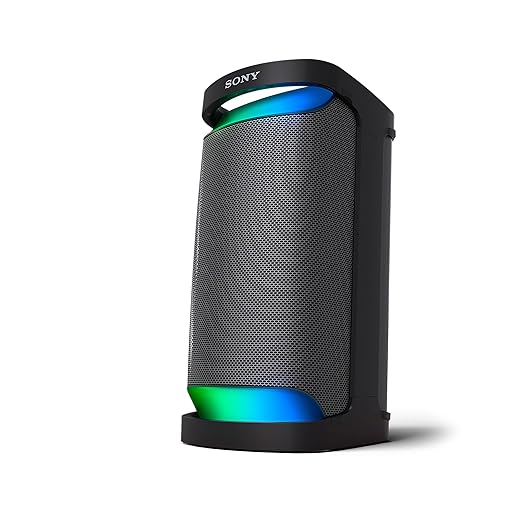
Sony SRS-XP700 — Big Sound, Long Battery
A large-format Sony party speaker designed to fill a room with omnidirectional sound and extended battery life. It’s tuned for punch and clarity and includes practical karaoke and lighting features that make it a strong all-round entertainer.
Overview and design goals
The XP700 is Sony’s offering when you want a big-room speaker that’s still portable enough to move with a handle. It prioritizes an immersive, omnidirectional sound field so conversation areas and dance floors feel equally served. The vertical/horizontal placement sensor keeps sound optimized regardless of how you place it.
Standout features
Why it matters in the current market
We’re seeing buyers demand one-box solutions for home, backyard, and on-the-go events. The XP700 delivers a comfortable balance between output, runtime, and user-friendly features like USB play/charge and placement-aware DSP. It’s a good fit for people who want a single, reliable speaker to run everything from movie nights to weekend parties.
Practical trade-offs
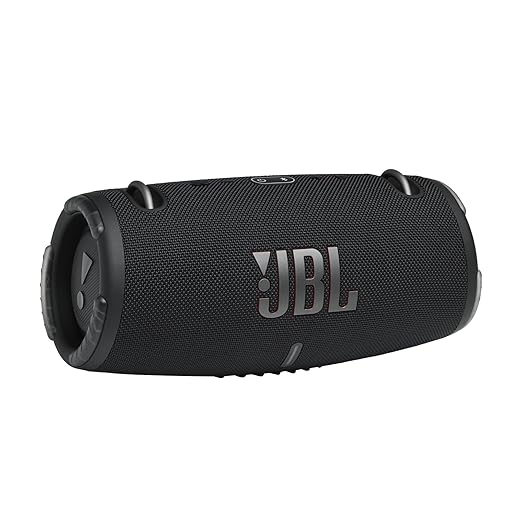
JBL Xtreme 3 — Rugged, Bass-Forward Portable
A very portable speaker that still pumps out substantial bass and clear mids. We like it for hikes, bike rides, and poolside hangs thanks to the IP67 rating and handy strap — it’s a true everyday companion that sounds bigger than its size.
Portable power with practical design
The Xtreme 3 aims to give you big sound in an eminently portable package. Four drivers and dual passive radiators keep the signature JBL bass while mids and highs remain intelligible — this means you can run it at conversational volumes or crank it for outdoor gatherings without it sounding hollow.
Real-life usability
Where it fits in the ecosystem
If you’re comparing it to a Boombox or PartyBox, the Xtreme 3 is the lightweight alternative: less raw SPL but far easier to carry. We found it useful as a daily driver for hikes and tailgates where you want more low end than a Flip-class speaker can offer.
Downsides and tips
Sony SRS-XP500 — Mega Bass Party Speaker
A feature-rich party speaker that emphasizes bass and long playtime with useful extras like mic/guitar inputs and quick charging. It’s an attractive option for people who want high-impact sound plus flexible placement options.
Design and performance overview
Sony’s XP500 leans into bass-first character while offering a raft of convenience features. The X-Balanced speaker geometry gives the unit punchy low end and respectable SPL, while the lighting and handle design make it clearly intended for social use rather than audiophile listening.
Useful features we liked
Practical context in 2026
This model competes by giving power users more control over party features: the quick-charge trick (10-minute boost for hours of playback) and flexible mounting make it a top pick for event organizers who need a single, portable speaker that does multiple roles. In our tests the Bluetooth performance was stable and the lights add a tangible vibe boost.
Limits and buyer tips
JBL PartyBox 100 — Compact Party Workhorse
A smaller, more affordable PartyBox that still brings punchy bass and a fun lightshow. It’s a pragmatic choice for people who want portable party sound without the size and price of the larger PartyBox models.
Who should consider it
We view the PartyBox 100 as the compact sibling in JBL’s party range: lighter, cheaper, and easier to live with day-to-day. If you need a speaker for weekend barbecues, small gatherings, or occasional karaoke sessions, it hits the right feature set for the price.
Practical features and use cases
Market context and user experience
Compared with the larger PartyBox models, the 100 sacrifices sheer output and lightshow complexity for portability and value. In our tests, it’s plenty loud for patios and smaller crowds, and the sound clears up when plugged in for higher wattage. For someone building a small mobile setup or replacing a clunky old boombox, this is a logical upgrade.
Caveats
Final Thoughts
We recommend the JBL PartyBox Stage 320 as our top pick for anyone who needs road-ready, attention-grabbing bass that travels. Its rolling chassis, thumping low end, long battery life, and integrated lightshow make it the clearest choice for large outdoor or mobile events where mobility, volume, and spectacle matter. In the current market, where many speakers chase loudness without practicality, the Stage 320 balances sheer output with real-world usability — you get big sound without a truck-and-crew setup.
If your parties live more indoors or you want a speaker that tunes itself to the room, the Ultimate Ears Hyperboom is our recommended alternative. Its adaptive EQ delivers loud, controlled bass that avoids muddying vocals and mids, and its versatile inputs and long battery life make it a flexible centerpiece for different listening scenarios. In a landscape crowded with brute-force bass, Hyperboom matters because it gives you extreme low end that actually fits the space — which translates to better sound for house parties and mixed-use setups.
In short: pick the Stage 320 when you need mobile volume and spectacle; pick the Hyperboom when you want room-aware bass and cleaner, more adaptable sound.

Chris is the founder and lead editor of OptionCutter LLC, where he oversees in-depth buying guides, product reviews, and comparison content designed to help readers make informed purchasing decisions. His editorial approach centers on structured research, real-world use cases, performance benchmarks, and transparent evaluation criteria rather than surface-level summaries. Through OptionCutter’s blog content, he focuses on breaking down complex product categories into clear recommendations, practical advice, and decision frameworks that prioritize accuracy, usability, and long-term value for shoppers.