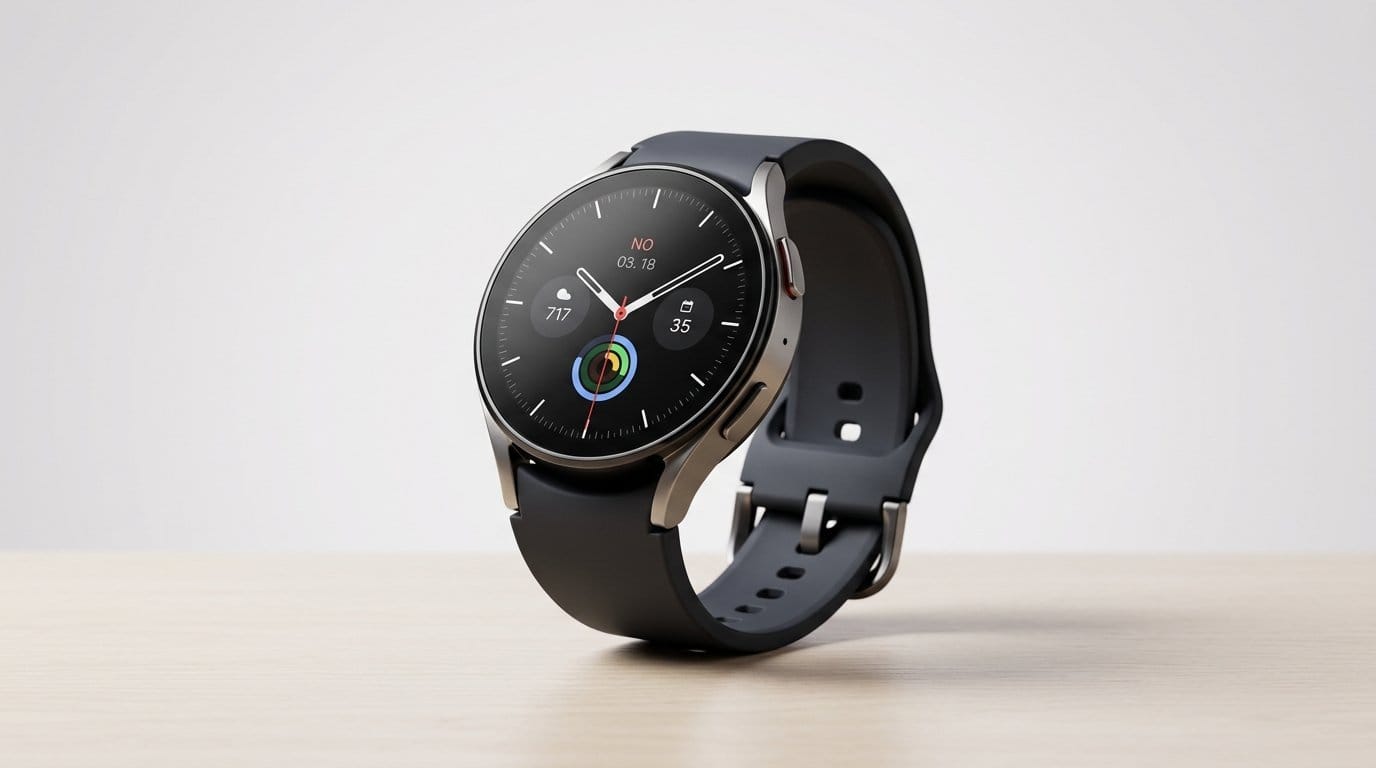

Can one wrist do it all? From races to meetings, which smartwatch actually earns its place on Android wrists?
Smartwatches are finally useful — but only when the software, sensors, and battery line up. We see too many attractive screens that die by dinner, or fitness features that feel half-baked.
We tested watches that span obsessive athletes to casual health trackers. We focused on user experience, design, and ecosystem integration. Short version: a great Android watch is more than notifications. It has reliable sensors, a coherent app ecosystem, and battery life that wont leave you stranded mid-run.
Top Picks


Garmin Forerunner 965 Premium Running Watch
We think the Forerunner 965 is the strongest option for athletes who need accurate metrics, long battery life and built-in maps. For long training cycles and race prep it provides data-driven guidance that is hard to beat.
What makes the Forerunner 965 special
We call the Forerunner 965 Garmin's full‑on performance watch: it’s built for runners and multisport athletes who want maps, multi-band GNSS positioning, long battery life and deep training analytics in one package. If your priorities are training load, recovery and route-aware running, this watch is purpose-built for that workflow.
Core strengths and what you’ll notice quickly
For competitive runners, the Forerunner 965 lets you lean on data rather than guesswork: suggested workouts adapt as you train, and race widgets can help plan strategy for course-specific efforts. The watch's durability and battery mean you can depend on it across multi-hour sessions without constant charging.
Who should buy it and why now
If you prioritize accuracy, training guidance and battery life over a broad app store, the Forerunner 965 is one of the best choices. The main downside is cost and a steeper learning curve if you’re new to Garmin’s ecosystem, but for committed runners and triathletes the payoff is significant.
Garmin Venu 3 Slate AMOLED 45mm
We liked the Venu 3 for combining a bright AMOLED screen with multi-day battery life and rich health analytics. It’s our pick if you want a visually appealing watch that still lasts well beyond a single day of use.
The Venu 3 in context
We consider the Venu 3 a rare combination: a capable, polished smartwatch experience (AMOLED screen, notifications, music) married to Garmin’s well-regarded sensor and training ecosystem. That makes it a good bridge for people who want both smart features and multi-day battery life.
Features you’ll use most often
In daily use the Venu 3 feels considered: the display is crisp for maps and notifications, health metrics are deep and customizable, and the watch can handle calls directly from the wrist. Compared with other AMOLED smartwatches we tested, Garmin managed to preserve long battery life while keeping a rich feature set.
Real-world trade-offs
The Venu 3 is pricier than lightweight fitness bands, and Garmin’s app UI is more focused on data than glossy storefronts. But if you want accurate tracking, strong recovery insights and the convenience of an AMOLED display without daily charging, the Venu 3 is a compelling middle ground.
Garmin Instinct 2 Solar Rugged GPS Watch
We recommend the Instinct 2 Solar for people who want a purpose-built, durable watch that extends run time via solar charging. It’s less about smartwatch flourishes and more about staying powered and connected in the field.
Why the Instinct 2 Solar exists
We think of the Instinct 2 Solar as a no-nonsense tool for outdoor users: hikers, backcountry runners, and anyone who wants to extend time between charges without sacrificing navigational features. Solar-powered watch charging changes the ownership dynamic—under real sun exposure this watch can feel almost perpetually powered.
Practical features you’ll rely on outdoors
On trail and in the field, the Instinct 2 Solar’s sensors and battery management let you track longer outings with less stress about finding a wall outlet. The trade-off is display fidelity: you won’t get the glossy maps and color richness of AMOLED devices, but you will get longer uptime and stronger durability.
Who should choose this watch
If your priority is resilience and battery endurance rather than app polish or a colorful screen, this watch is one of the clearest choices on the market. It's especially appealing to users who value long expeditions, dependable navigation, and a simple, rugged interface that won’t fail when conditions get rough.
Google Pixel Watch 2 Obsidian LTE
We liked the Pixel Watch 2 for its tight Fitbit integration and polished software, which make health and safety features feel natural and useful. The watch delivers excellent everyday smarts and safety tools, though battery life remains its most consistent complaint.
What stands out about the Pixel Watch 2
We see the Pixel Watch 2 as Google’s most mature attempt at combining Fitbit’s fitness sensibility with Google’s software strengths. The watch feels cohesive: notifications, assistant interactions, and health summaries are tightly integrated in a way that makes the device feel like an extension of your phone rather than a standalone gadget.
Features and day-to-day experience
In daily use we appreciated the immediacy of data: heart rate and sleep trends are presented clearly, and Fitbit’s coaching nudges feel practical. Charging behavior is the watch’s weakest link; inconsistent charging accessories on refurbished models can make ownership frustrating if you don’t invest in a known-good charger.
Why it matters now
If you want a smartwatch that focuses on health while retaining polished assistant features and Android-first conveniences, this model remains one of the better compromises. It isn’t the longest-lasting wearable on a single charge, but for someone who values UI polish and accurate day-to-day tracking in the Google ecosystem, it’s a leading option.
Samsung Galaxy Watch5 Pro 45mm Black
We appreciate the Watch5 Pro's rugged build, sapphire glass and larger battery designed for outings and long navigation sessions. It's a solid choice for hikers and cyclists who want reliable GPS and route-tracking without a dedicated sports watch's bulk.
Who should consider the Watch5 Pro
We recommend the Watch5 Pro to Android users who spend a lot of time outdoors and value GPS accuracy and durability. The Pro's heavier build and sapphire glass surface make it better suited to active wearers than those wanting an unobtrusive daily watch.
Practical features you'll use
In practice, the Watch5 Pro excels when you push it: we saw consistent GPS paths on hikes and longer battery runtimes than the standard Galaxy models. The hardware is clearly built with endurance in mind—though that comes at the cost of added size and weight.
Integration and trade-offs
Samsung's One UI on Wear OS provides straightforward notification handling and media control, and pairing is seamless with Samsung phones. The main trade-offs are the watch's size and the occasional charger mismatch on refurbished units—if you're buying used, expect to replace the charger for faster top-ups. For multisport athletes looking for ultra-detailed training metrics, dedicated training watches still offer deeper analysis, but the Watch5 Pro sits comfortably between smartwatch convenience and outdoor capability.
Fitbit Sense 2 Health-Focused Smartwatch
We liked the Sense 2 for users who want a health-first watch with excellent stress and sleep insights and long battery life. The device surfaces useful signals for everyday well-being, though some clinical features can be finicky and premium content is behind a subscription.
The Sense 2 in a sentence
We view the Sense 2 as Fitbit's most focused health product: it prioritizes stress management, sleep profiling, and long-term trends over flashy third‑party apps. For people who want actionable wellness feedback without daily charging, it's an attractive option.
Features and what you’ll use daily
In real-world use the Sense 2 excels at trend detection: daily readiness scores and sleep profiles help frame long-term behavior changes. The weaker point is that some of the most useful insight layers are gated behind Fitbit Premium, which can be off-putting if you expect those analyses to be native to the device.
Trade-offs and practical advice
If you need clinical-grade diagnostics, this isn’t a medical device: consider the Sense 2 as a wellness coach rather than a substitute for medical testing. For everyday wear, we like the included bands and how unobtrusive it is on the wrist. If you prioritize mindfulness and better sleep, the Sense 2 gives consistently useful signals with minimal fuss.
Samsung Galaxy Watch6 44mm Graphite
We found the Watch6 to be a polished, everyday smartwatch with a very readable display and a feature set that leans into health tracking. Its strengths are comprehensive sensors and a bright, large screen; the trade-off is middling battery life compared with more sport-focused devices.
What it is and who it's for
We see the Galaxy Watch6 as Samsung's attempt to combine premium wearable sensors with a mainstream, wearable-first design. The big screen and polished software make it an easy pick for people who want detailed health data—sleep coaching, personalized heart-rate zones, continual heart monitoring—and a more familiar, watch-like interface on an Android phone.
Key features and day-to-day use
In our testing and from reading owner reports, the display and sensor responsiveness are definite highlights: notifications are readable, activity tracking is reliable for steps and cardio, and the BIA readings offer a convenient snapshot for body-composition trends. That said, we also noticed that the advanced metrics are best used as directional signals rather than clinical-grade readings.
Integration, limits, and practical tips
The Watch6 works best paired with a Samsung phone for the tightest integration, but it pairs well with other Android devices too. Where it matters: Samsung Health ties everything together and provides actionable cues. The main limitation is battery life; most users will need to charge nightly if they enable always-on display or heavy sensor use. If you buy a renewed unit, plan to buy an official Samsung charger or a quality USB‑C fast charger and be mindful of band choices if you want a dressier look.
Why it matters now
We think the Watch6 sits in the middle ground of the Android smartwatch market: smoother and more polished than many value watches, but not quite as battery-dominant as the Garmin or certain Fitbit models. For users who prioritize screen quality, daily health feedback, and app polish on Android, it remains a compelling and practical choice.
Fitbit Versa 4 Fitness-Focused Smartwatch
We find the Versa 4 to be a practical everyday fitness smartwatch that nails the basics: Daily Readiness, solid workout tracking, and long battery life. It isn’t the deepest fitness tool for athletes, but for most people it’s an efficient and unobtrusive fitness companion.
Who the Versa 4 suits best
We see the Versa 4 as a sensible upgrade for anyone moving from a basic tracker to a proper smartwatch without paying for high-end athlete features. It’s about convenient fitness coaching and long battery life rather than hyper-detailed training metrics.
What you’ll interact with most days
The watch performs especially well for casual runners, gym-goers and people who want consistent daily metrics. The trade-off is that many of the deeper analyses—guided programs, advanced sleep detail—are behind Fitbit Premium. If you’re comfortable with that model, the Versa 4 still delivers a lot of utility at a reasonable price.
Practical tips and ecosystem notes
Fitbit’s app ecosystem remains one of the best for easy-to-digest health summaries. We recommend pairing the Versa 4 with a Premium trial if you want to see how the readiness and training suggestions impact your routine—otherwise you’ll still get strong day-to-day tracking without a subscription.
Final Thoughts
We recommend two clear winners depending on what you actually do with a watch — browse our Top Picks.
Honorable mentions: the Garmin Venu 3 if you want a bright AMOLED and longish battery life without sacrificing sports features; the Instinct 2 Solar for rugged, solar-extended field use; and the Galaxy Watch5 Pro for hikers and cyclists who want robust GPS and a tougher build.
Bottom line: pick the Forerunner 965 if training accuracy and endurance are non-negotiable. Choose the Pixel Watch 2 if you want the most polished, health-forward everyday Android experience with solid software integration.
Frequently asked questions
How did we pick these smartwatches for android users options?
We shortlist models that balance performance, reliability, and value for typical buyers—not just the highest spec sheet. Hands-on notes, owner feedback, and return/warranty policies all feed the ranking.
Which smartwatches for android users pick is best for most people?
Start with our top overall choice if you want the safest balance of price and features. Move up or down the list only when a specific need—budget, ecosystem, or a must-have feature—clearly applies to you.
Do prices on this smartwatches for android users list change often?
Yes. Retailers run frequent promos, so use the live price buttons on this page and compare shipping and return windows before checkout—the best deal is not always the lowest sticker price.
Should I buy the cheapest smartwatches for android users on the list?
Only if the trade-offs fit your use case. The budget pick can be excellent value, but check what you give up in build quality, software support, or key features you will use every week.
What if none of these smartwatches for android users picks fit?
Use the comparison and guide links on this page to narrow by size, platform, or feature, then revisit the list with your must-haves written down—forcing a mismatch creates more returns than savings.
How often is this smartwatches for android users roundup updated?
We refresh rankings when major models launch or pricing shifts enough to change the value story. Check the publish date at the top and compare current specs if you are reading months later.

Princess Rioboca is the Lead Editorial Writer at Option Cutter, bringing over seven years of hands-on experience in consumer technology journalism. Specializing in home networking and smart home architecture, she transforms complex technical data into practical, real-world upgrades. Princess personally tests and audits every product she reviews—evaluating real-world Wi‑Fi throughput, cable management durability, and streaming ecosystem stability—to filter out spec-sheet noise. Her rigorous, field-tested insights are designed to give readers transparent, unbiased buying advice on what to purchase, what to skip, and exactly why.