
Can one slim box actually turn your couch into a cinema? (Short answer: yes — if you pick the right one.)
Your TV speakers are lying to you. We all know the feeling: dialogue is muddy, explosions are flat, and the couch just isn’t dramatic enough. Soundbars aren’t magic, but the right one changes the whole room.
We looked for bars that do more than add volume. We focused on spatial clarity, design that fits a living room (not a studio), and ecosystem smarts that make setup painless. Expect Dolby Atmos height effects, easy streaming, and systems that scale when you want more punch.
Our Top Picks






Sonos Arc Ultra 9.1.4 Dolby Atmos
We think it sets a new bar for what a single‑piece soundbar can do in a modern living room. It pairs industry-leading spatial processing with Sonos’s ecosystem strengths, but it carries a premium price and rewards users who plan to expand the system.
Why we recommend it
We see the Arc Ultra as the soundbar for readers who treat audio as part of a broader smart-home ecosystem. It’s not just about loudness — Sonos has invested in Sound Motion technology and user-facing tuning to create a genuinely three-dimensional soundstage from a single chassis. For movies and TV, that translates to effects that move convincingly around and above the listening position.
Features that matter in real rooms
Our practical takeaway: the Arc Ultra is as much a system‑builder as a product. If you want the ultimate single‑component experience, it’s excellent. But Sonos also makes it easy to add a Sub and Era 300 rears later—doing so is where the bar becomes genuinely cinematic. That flexibility is why Sonos still commands a premium.
Design and ecosystem context
Sonos sells a combination of performance and membership-like convenience: tight app experiences, consistent updates and multiroom audio. Competitors may match or beat the Arc Ultra in raw hardware specs at certain price points, but Sonos’s software + hardware integration remains a differentiator. For living rooms where we want simplicity without sacrificing expandability, the Arc Ultra is our pick.
Samsung HW-Q950A 11.1.4 Ultimate System
We think it sets a benchmark for out-of-the-box cinematic immersion without a receiver. The discrete surround and height channels deliver impressive spatial detail, although it’s a big investment and takes room planning to shine.
What makes it flagship-grade
We consider the HW-Q950A as Samsung’s most ambitious consumer soundbar of its generation: it packs multiple discrete channels including up‑firing drivers and rear satellites to put a real ceiling and surround layer into mid-sized living rooms. That architecture is what separates it from smaller 3.1–5.1 systems — you get genuine surround placement and scale.
How it performs in the living room
In practice, we found the Q950A most rewarding when paired with a room that has some distance between the seats and the speakers. It rewards careful placement: rear speaker spacing and sub placement make measurable differences. If you live in a compact apartment, the system is still excellent but may be overkill acoustically and spatially.
Positioning and purchase advice
This is a ‘buy once, buy right’ proposition for people building a serious TV-first listening room without running speaker wire. If flexibility and immersive fidelity are priorities — and you have the space and budget — it’s one of the few all-in-one systems that truly approaches the enveloping quality of a discrete multi‑speaker AVR setup.
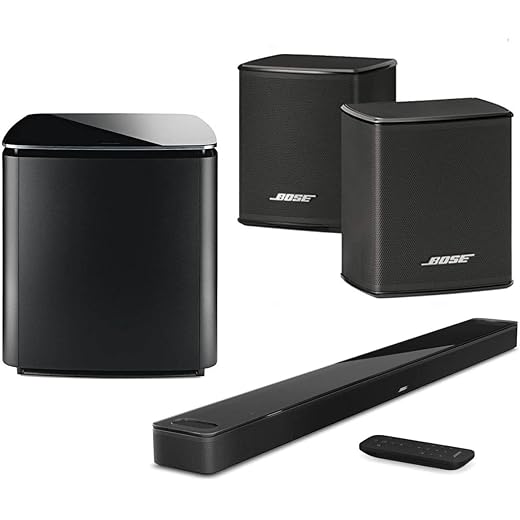
Bose Smart Ultra Dolby Atmos System Bundle
We found the bundle delivers a sophisticated, neutral presentation with strong dialogue clarity and dependable surround effects. It’s expensive, but the combination of the Atmos bar, Bass Module 700 and wireless surrounds offers a refined, flexible home-theater experience.
The bundle we recommend for polished rooms
We think this Bose package is aimed at buyers who prioritize a refined, uncolored presentation and integrated smart features. Including the Bass Module 700 and two wireless surrounds creates a full system that rarely needs additional tweaking. For living rooms where aesthetics, simplicity and consistent tuning are priorities, it’s a very strong option.
Notable capabilities and how they matter
In our experience the bass is controlled and musical rather than earth-shattering; for viewers who prefer subtlety and accuracy, that’s a win. The Bose sound signature leans toward dialogue clarity and midrange detail, so TV shows and films with dense vocal content benefit noticeably.
Final perspective
If budget isn’t the chief constraint and you want a carefully tuned, out-of-the-box experience with a minimal learning curve, this Bose ensemble is compelling. It sits near the top of our list for those who value a polished, cohesive system and are already comfortable with a brand-specific ecosystem.
Sony HT-A5000 5.1.2 Dolby Atmos Bar
We found it delivers a broad, room-filling soundstage and useful connectivity for living-room setups. It balances Atmos height effects, clear dialogue, and straightforward smart features, though deep bass and customization are best with add-on subwoofers or rear speakers.
What it is and who it's for
We see the HT-A5000 as Sony's attempt to give a near-premium Atmos experience without a full AV receiver. It's a long, well-built soundbar that ships with up-firing drivers, side beams and a built-in woofer so you get an immediate lift over TV speakers with minimal fuss. The appeal is simplicity: plug in with HDMI eARC, enable the smart-room calibration and you have usable surround sound in minutes.
Key features and practical takeaways
We liked that the bar handles dialogue clarity well out of the box thanks to a dedicated center-like focus, and that streaming from phones or the network is painless. Gamers benefit from the low-latency passthrough options. Where it shows its limits is in raw impact: the internal subwoofer is good for small-to-medium rooms, but if you want theater-style chest-thumping bass you’ll want Sony’s SA-SW3 or SA-SW5.
Design and ecosystem considerations
Sony positions this as a modular hub: it sounds very good on its own, but the product truly scales when you add optional Sony rear speakers and a sub. That’s useful if you prefer to buy incrementally. The user experience is straightforward and TV integration is sensible — but some of the deeper processing options are intentionally restrained compared with a receiver, so power users may find the controls basic. Overall, for people who want an immersive Atmos-like upgrade without wiring a receiver, we found this a compelling middle ground.
Sonos Beam Gen 2 Compact Dolby Atmos
We think it delivers surprisingly rich sound from a small package and integrates seamlessly into Sonos homes. It’s particularly strong for dialogue and music in small-to-mid rooms, but bass and Atmos depth improve noticeably with added Sonos components.
Why the Beam Gen 2 makes sense for many rooms
We see the Beam Gen 2 as the practical entry point to Sonos’s ecosystem. It’s physically small but sonically punchy, and it delivers the kind of clarity and smart features — AirPlay 2, voice control, Trueplay tuning — that matter in a living room where space and simplicity are priorities.
Strengths, limits, and real‑world usage
In practice the Beam is a strong pick for apartments or smaller living rooms where a full tower setup would be overkill. It doesn’t try to be the loudest or deepest bar — instead it prioritizes balance and integration. For listeners who stream music and want occasional cinematic impact, it’s a versatile compromise.
Where it sits in the market
Compared with larger or pricier Sonos and competitor models, the Beam Gen 2 is a measured, user-friendly option. We recommend it to people who value an elegant, low-friction setup and plan to build a multiroom system over time rather than buy the loudest single component up front.
VIZIO SV510X-08 5.1 Dolby Atmos System
We were surprised by how much immersive sound Vizio delivers for the money — dedicated rear satellites and a compact sub turn compact living rooms into convincing home theaters. Expect app-based controls and a few compromises in polish.
Why it stands out on a budget
We think the SV510X-08 is a clear example of how manufacturers are democratizing surround sound. For many buyers, a real surround impression needs rears and a sub — Vizio packages those in an affordable, space-conscious design. That makes the bar ideal for people upgrading a living room or family room where a full AVR system isn’t practical.
Features and real-world behavior
We liked that the out-of-box presentation emphasizes dialogue and clarity, and the included rear speakers actually add a palpable rear field. The tradeoffs are in the finer details: the Vizio app is necessary to access some advanced settings and can be flaky on occasion, and the physical remotes aren’t always shipped consistently depending on region.
Who should buy it
If you want an immediate jump in immersion without hunting for sale-priced receivers or separate speakers, this is a pragmatic choice. We recommend taking a few minutes with the app to dial down excess bass or tweak the dialog setting — a small amount of calibration goes a long way in getting theater-like results from an affordable package.
Sony HT-G700 3.1 Dolby Atmos Bar
We feel it gives a solid 3.1 Atmos-like experience with easy setup and a strong center channel for dialogue. It’s a pragmatic option for viewers who want immersive feel without spending on full multi-piece systems, though it won’t replace true up‑firing arrays.
The practical 3.1 we can recommend
We approached the HT-G700 as a sensible upgrade path for people who want a more cinematic experience without investing in a 5.1/7.1 rig. Sony’s Vertical Surround Engine and immersive AE processing do a respectable job emulating height and surround effects from a front-firing arrangement, and that helps deliver a wider perceived soundstage for TV shows and many movies.
Features and how they affect everyday listening
We recommend the HT-G700 for gamers and casual movie watchers who prioritize clarity and convenience. It’s not a fanatic’s Atmos rig, but it does what most living rooms need: better separation, clearer voices, and a sense of immersion without complexity.
Buying guidance
If you’re upgrading from internal TV speakers and want minimal setup friction, this unit is an economical, low-hassle path. If height realism or thunderous bass are top priorities, consider stepping up to a system with discrete up‑firing drivers or adding a more powerful subwoofer.
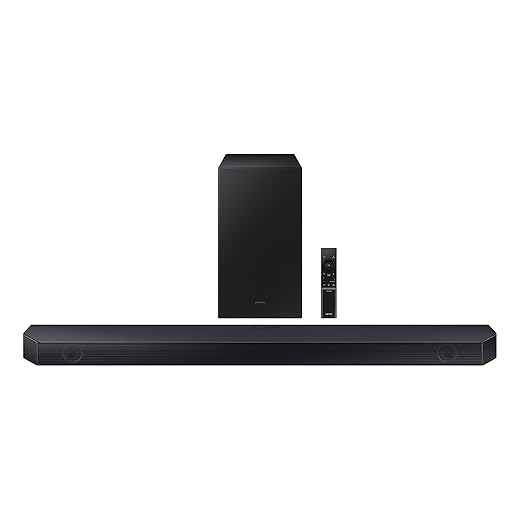
Samsung HW-Q60C 3.1ch Q-Symphony Soundbar
We found it delivers clear dialogue and a wider soundstage than built‑in TV speakers, and Q‑Symphony is a practical feature if you own a compatible Samsung TV. It’s a solid midrange choice, but power users may miss dedicated height channels.
Where this fits in your setup
We think the HW-Q60C is aimed at people who want a tangible improvement over television speakers without complexity. Its strengths show up in TV-watching and gaming: dialogue pops, ambient effects are cleaner and Game Mode reduces distractions while adding directional cues.
What you’ll actually get
In practice, pairing it with a Samsung TV that supports Q‑Symphony yields the best returns: the TV and soundbar work together as one system and that boosts perceived surround without extra speakers. If you want the genuine overhead cues of Atmos we recommend stepping up to Samsung’s higher-end models with dedicated up‑firing drivers or adding wireless rear speakers — browse our Top Picks.
Final take
This is a serviceable, affordable step up for most living rooms—especially if you already own a compatible Samsung TV. We appreciate the straightforward setup and TV-centric features, even if audiophiles will chafe at the limited low end and processing control.
LG S60T 3.1ch AI Sound Pro Bar
We think it’s a dependable companion for LG owners who want clear center-channel dialogue and an easy single-remote experience. It’s not transformative audio, but it’s competent, stylish and integrates well with LG features.
Who should consider the S60T
We view the LG S60T as a pragmatic choice for shoppers who want a reliable upgrade from TV speakers without complexity. If you own an LG TV, you get some ecosystem features like WOW Orchestra and a single-remote experience that reduce friction — that kind of synergy matters to many buyers.
Features and everyday performance
On the couch, the bar sounds balanced and polite: vocals sit in front and the staging is adequate for casual movie nights. It’s not geared toward bass-heads; the included wireless subwoofer will be needed for deeper impact. Where LG scores is in user experience — pairing, remote control and TV integration are straightforward and largely worry-free.
Practical call
If you want fuss-free improvements and own other LG devices, this is an easy sell. But if you crave a true Atmos ceiling layer or theater-like bass without an extra sub, you should look higher up the ladder.
TCL Alto 8i 2.1 Dolby Atmos Soundbar
We found it punches above its price with dual built‑in subwoofers and tidy feature coverage for streaming and TV modes. Expect good value for casual viewers, but audiophiles will notice limits in Atmos depth and bass extension at high volumes.
Why people buy the Alto 8i
We see the Alto 8i as an ideal starter upgrade for TVs with thin speakers. At its price point it offers Dolby Atmos branding, dual internal subwoofers and a simple, rack-friendly footprint that appeals to apartment dwellers or first-time soundbar buyers. It’s built for plug-and-play convenience and easy daily use.
Real-world performance and caveats
We’ll be blunt: the Alto 8i won’t fool anyone into thinking it’s a high-end Atmos system. The height cues are light and often more impressionistic than directional. That said, for day-to-day TV and music it’s an excellent value — and we appreciated how quick it is to get good sound with minimal setup.
Who should pick it
If you want a no‑friction, wallet‑friendly upgrade that actually improves dialogue and adds bass without adding components, this is a sensible choice. If you want deep bass, room-shaking LFE or precise Atmos imaging, plan to budget for a higher‑tier bar or external sub/rears.
Final Thoughts
Our top pick for most modern living rooms is the Sonos Arc Ultra 9.1.4 Dolby Atmos. It marries industry-leading spatial processing with Sonos’s seamless app and multiroom ecosystem. The Arc Ultra gives real verticality and pinpoint imaging from a single piece, and it rewards users who want to expand with wireless surrounds and a Sonos sub. Why we pick it: it’s the best blend of immersive sound, everyday usability, and future-proofing for smart homes — ideal for medium to large living rooms where design and ecosystem matter as much as raw power. Be prepared for a premium price, but the experience and expandability justify it for home-theater-focused households.
If you want the closest thing to a theater straight out of the box, choose the Samsung HW-Q950A 11.1.4 Ultimate System. With discrete rear and height channels, it delivers the widest, most cinematic soundstage without a receiver. It’s the better pick for large rooms where speaker placement and channel separation make a big difference. Expect more setup planning and a bigger footprint, but also more true-to-source dynamics and surround precision.
If you live in a small apartment or want a compact option that still impresses, the Sonos Beam Gen 2 is our short-list runner-up for tight spaces — clean integration, strong dialogue, and surprisingly full sound from a small package.
Frequently asked questions
What is the main point of “Soundbars That Actually Upgrade Your Living Room”?
This piece explains where soundbars that actually upgrade your living room matters in real buying decisions—not just headline specs. We focus on trade-offs, who benefits most, and what to verify before you spend.
Who should read this soundbars that actually upgrade your living room guide?
Read it if you are actively shopping, upgrading, or trying to separate marketing claims from day-to-day use. Skip it if you already own the gear and are not planning a change this season.
What changed recently around soundbars that actually upgrade your living room?
Prices, firmware, and feature tiers shift quickly in this category. We call out what is new enough to affect your decision and what is incremental hype you can safely ignore.
How should I use this editorial when buying?
Treat it as context before you compare models: note the risks and priorities here, then cross-check specs and current pricing on the picks that match how you actually use the product.
What is easy to get wrong about soundbars that actually upgrade your living room?
Buyers often overweight one spec—brightness, speed, or brand—and underweight fit for their room, ecosystem, or warranty support. We flag the mismatch we see most often in reader questions.
Where should I go next after reading?
Use the related comparisons and top picks linked near the end of this article for model-level shortlists, then confirm return policies and compatibility with the devices you already own.

Iqra Jumar is Option Cutter's editorial writer. She writes practical editorials and buyer guides that focus on real-world upgrades—better Wi‑Fi, cleaner cable setups, smarter streaming, and everyday fixes—not spec-sheet noise alone. Her work helps readers decide what to change now, what to skip, and why.