Tiny LEDs vs. inky pixels — which one should live on your wall (or desk) in 2026?
Screens have never been more persuasive. We flipped between OLED’s perfect blacks and Mini LED’s head‑turning highlights and the differences are no longer academic.
We tested flagship TVs and focused gaming monitors to see what actually changed: brighter panels, smarter upscalers, and gaming chops that finally matter. Short version — the tradeoffs are clearer: OLED still owns deep contrast and color fidelity in our OLED TV testing; Mini‑LED TVs now push brightness, HDR pop, and HDR upscaling in ways that shift who should buy what.
Top Picks
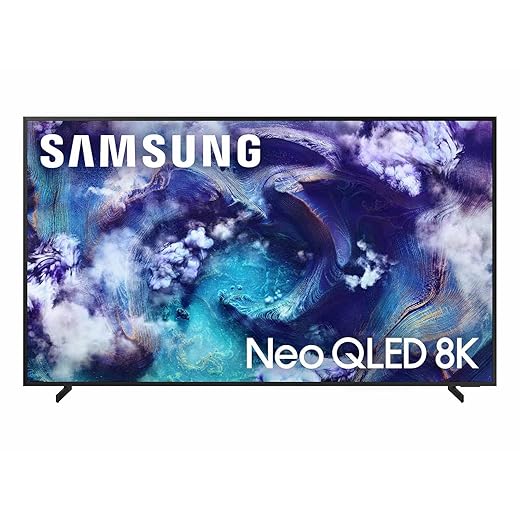



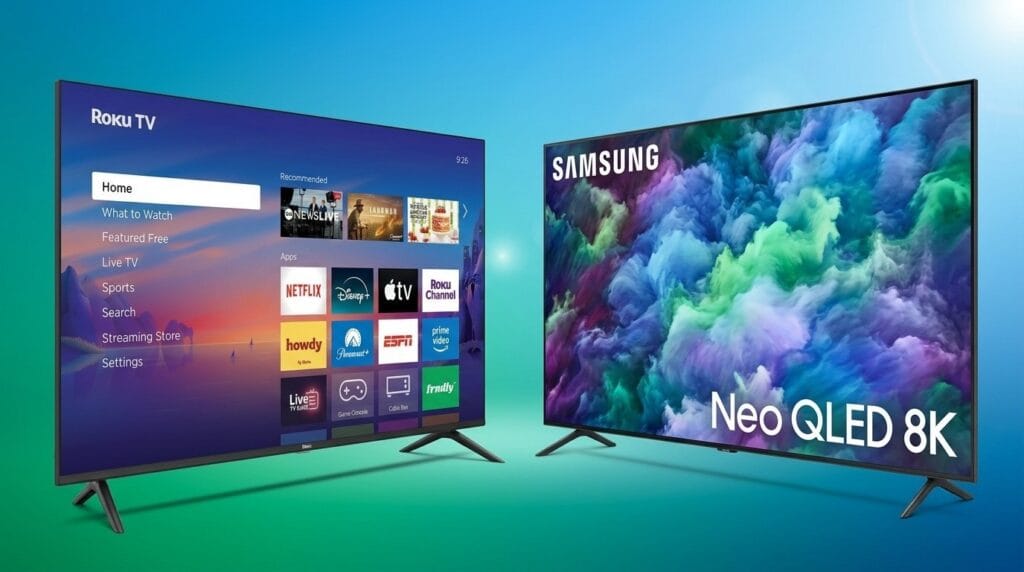
Samsung 65-inch 8K Neo QLED QN900F
We think this Neo QLED represents Samsung’s most fully featured 8K proposition in its class: an AI engine built to upscale aggressively and selectively, paired with a high‑density Mini‑LED array. It’s the choice for buyers who want future‑proofing and the cleanest 8K processing available today.
What this TV aims to do
The QN900F is Samsung’s high‑end 8K Neo QLED is statement piece that bundles extreme upscaling, a dense Mini‑LED array, and a high‑quality industrial design. The idea here is not to make 8K native content the day‑to‑day norm, but to make everything you watch look closer to 8K through computational processing.
Where it shines
In everyday use the upscaling and motion handling are impressive: lower‑resolution sports and streaming look cleaner and text remains legible even with aggressive upconversion. If you sit close to a very large screen, the density and processing make a noticeable difference compared with otherwise excellent 4K sets.
Who should consider it — and who shouldn’t
This is a luxury pick. If you want the latest in processing and very high peak luminance for large rooms, it’s a top candidate — pair that with backlit LCD brightness tiers on brightness vs energy use. But buyers should understand the pragmatic limits of 8K today: native content is sparse (8K TV libraries are still thin), and the set’s benefits are most apparent on very large screens or when you value future‑proofing and best‑in‑class upscaling over immediate content availability. For most buyers a high‑end 4K Mini‑LED or OLED from our TVs by type hubs will be the more cost‑effective sweet spot.
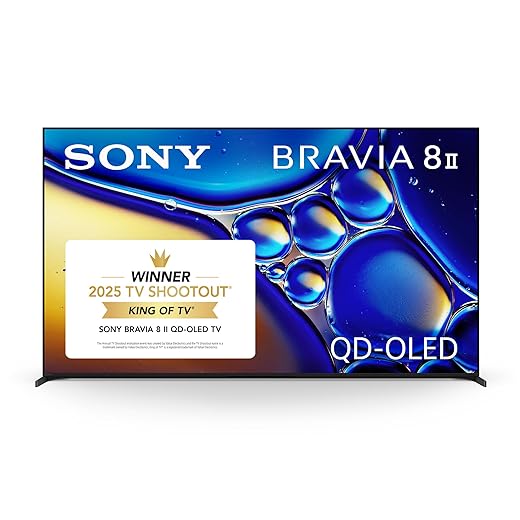
Sony BRAVIA 8 II 55-inch QD‑OLED
We think this Sony nails a convincing theater‑like experience: strong color volume from a quantum‑dot OLED and a screen‑driven audio system that often removes the need for a soundbar. It’s an especially good fit for movie buffs and PS5 owners who want a calibrated look out of the box.
What we tested it for
Sony’s BRAVIA 8 II aims at viewers who prioritize cinematic image and integrated audio. We evaluated it's handling of HDR films, sports, and gaming, and found that the QD-OLED module plus the XR Processor brings improved peak brightness and a wide color gamut that translates into punchy, believable images without the oversaturation that some competing panels show.
Feature highlights and user impact
The sound design — where speakers are tuned to the screen — is one of the set’s real differentiators. For small‑to‑medium rooms we found the built‑in audio surprisingly competent; dialog clarity and on‑screen placement are better than most sets in the class. Players of PlayStation 5 will appreciate Sony’s specific features that reduce latency and optimize picture/processing for the console.
Real‑world tradeoffs
This is a premium 55‑inch TV, and price shows it. Some users reported minor OS sluggishness and wished for a remote with a mic for faster voice tasks, which are small friction points in an otherwise strong package. If you want a 55‑inch that prioritizes accurate color, deep blacks, and richer built‑in audio, this remains one of the sharper picks we recommend.
LG 48-inch OLED evo C4 (2024)
We think the 48‑inch C4 is the sweet spot for serious console and PC gaming: compact enough for desktop use, but large enough for immersive living‑room play, with full HDMI 2.1 and low latency. The evo panel and α9 processor make HDR and motion feel particularly smooth.
Why the 48‑inch C4 matters
LG’s 48‑inch C4 has become a favorite among gamers who want true OLED contrast in a size that fits living rooms and desks — a common reason shoppers cross-shop our gaming TVs. The evo enhancements push peak highlights higher than older panels, making HDR content look punchier while preserving deep, inky blacks where it counts.
Real‑world performance and ecosystem
We found the C4 to be exceptionally versatile: it’s small enough to sit comfortably near a sofa or on a large desk but big enough to deliver a theater‑like experience for single‑player games and movies. Latency and variable refresh rate behavior on consoles are excellent out of the box, and the Game Dashboard is a practical touch for quick adjustments.
Tradeoffs to weigh
If you want the very brightest highlights or a TV strictly for bright rooms, some QD‑OLED or top Mini‑LED alternatives can produce higher sustained brightness. Also, webOS can feel less snappy than bare‑bones streaming boxes, though the Re:New updates are a meaningful commitment. For most gamers and mixed‑use buyers, the C4’s balance of size, features, and panel quality makes it one of our top recommendations.
LG 83-inch OLED evo C5 (2025)
We find the C5’s larger evo panel and Alpha 9 Gen8 processing deliver consistently strong brightness and color in brighter rooms. It’s designed for viewers who want cinema‑grade picture and large‑screen presence without compromise.
Where this sits in the market
The 83‑inch LG OLED evo C5 is a statement product: a large‑format OLED aimed at viewers who want near‑flagship picture performance without stepping up to boutique prices. LG’s evo treatment and the Alpha 9 Gen8 processor push sustained brightness and color handling, which is meaningful if you watch HDR content or keep living‑room lights on during daytime viewing.
What the hardware gives you
For large‑screen viewing the payoff is straightforward: film and nature footage look more dimensional, with highlights that don’t wash out shadow detail. We also appreciated LG’s gaming credentials — multiple HDMI 2.1 ports and high refresh support — which make this TV a flexible pick for consoles and PC.
Practical tradeoffs
Big panels mean placement compromises. The C5 rewards a properly darkened or controllable light environment to maximize contrast and minimize reflections. Out of the box the C5 can look very vivid; we recommend using calibration presets for skin tones and film content. If you want a large, bright OLED that keeps color integrity and supports modern gaming, this one is a sensible premium choice — but budget for a dedicated sound system to match the image.
ASUS ROG Strix 27-inch OLED Monitor
We think ASUS’s 27‑inch Strix hits the sweet spot for competitive players who want OLED contrast at 1440p and very high refresh rates. The custom cooling and OLED care features address two of the technology’s traditional pain points: longevity and thermal throttling.
Who should consider this monitor
The ASUS ROG Strix XG27AQDMG is designed for gamers who want the benefits of OLED — true blacks and instantaneous pixel response — without giving up refresh rates that competitive titles require. ASUS has paired a 1440p WOLED panel with a robust thermal solution and a focus on longevity to make OLED practical for sustained gaming sessions.
Notable engineering choices
In our hands the monitor delivered one of the most engaging combinations of speed and contrast we’ve tested at this size. Colors are vivid and blacks are true, which helps visibility in dark scenes and provides a more immersive feel in single‑player titles.
Practical notes
You should treat this like a premium tool: use the OSD options to tune text clarity for productivity work and ensure your cables can handle the high‑bandwidth signals at extreme refresh rates. Also, consider glare and desk placement — glossy panels reward controlled lighting. If you want a 27‑inch OLED that’s purpose‑built for serious gaming with manufacturer steps to tackle OLED weaknesses, this is among the best options available.
Samsung 65-inch OLED S85F (2025)
We find this model strikes a compelling balance between OLED contrast and everyday brightness, with AI upscaling that meaningfully improves non‑4K sources. It’s especially attractive if you want a flexible set for PC gaming, streaming, and movies without paying flagship prices.
Why we look at this set
We approached this Samsung 65S85F as a practical OLED: a 65‑inch model that brings self‑illuminating pixels and Samsung’s Vision AI processing into a price range that used to be reserved for mid‑tier LED TVs. In everyday use it delivers the advantages people buy OLEDs for — true blacks, wide viewing angles — while the NQ4 AI Gen2 processor helps boost clarity on lower‑resolution content.
Key hardware and what it means for you
We appreciated how the TV handled PC input: it auto‑detected our desktop and kept text reasonably crisp after a small tweak to sharpness settings. Gamers will like the responsiveness, and HDR highlights have pop without the blown‑out look that undermines shadow detail.
UX, limitations, and practical notes
The on‑screen software is Samsung through and through: capable, but opinionated. We ran into bloaty prompts and the requirement to create or navigate a Samsung account during setup — these friction points matter more if you’re non‑technical or want a clean, input‑first experience. Sound is serviceable but not the reason to skip a soundbar if you care about immersive audio. Also, anecdotal reports and listings indicate Samsung uses different panel variants across sizes for this model line, which can produce different brightness and color behavior between a 65" and a 77" — so confirm the panel type before you buy.
In short, we recommend this if you want OLED contrast and Samsung’s AI toolset at a price that undercuts a true flagship. It’s our pick for buyers who want a all‑round living‑room performer without the full flagship premium.
LG 27-inch UltraGear OLED Gaming Monitor
We think LG’s 27‑inch UltraGear OLED gives fast gamers the colors, contrast, and responses that competitive play demands. The combination of 240Hz refresh and near‑instant response time keeps motion crisp while OLED contrast improves visibility in dark scenes.
Who this is for
We see this UltraGear as a dedicated competitive gaming monitor that brings OLED contrast to the framerate and input‑lag demands of esports. It’s built for players who want both the deep blacks of OLED and the high refresh rates that reduce motion blur and improve targeting in fast titles.
What makes it stand out
In practice the UltraGear offers a striking gaming picture: explosions feel punchier, shadow detail is easier to read in darker maps, and the OLED’s fast transitions reduce ghosting. LG’s OLED care and auto pixel management help mitigate burn‑in concerns for heavy gaming sessions.
Practical caveats
The glossy coating helps pop colors but makes reflections more noticeable in bright environments. Also, OLED rendering of small text can feel less clinical than high‑density LCDs, so if you plan to mix a lot of office work with gaming you might notice subtle softness in UI text. For most players who prioritize visuals and responsiveness, however, this is one of the more compelling 27‑inch OLED gaming monitors available.
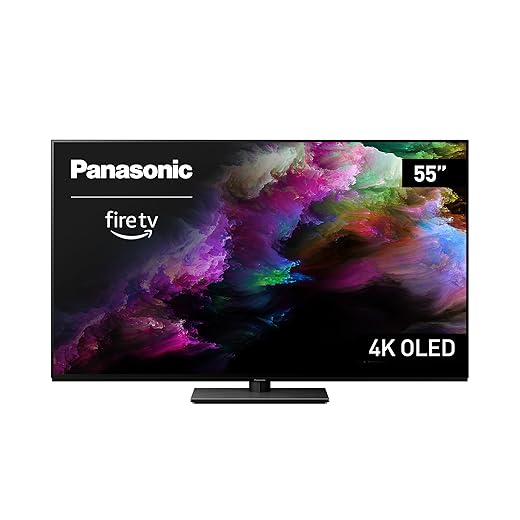
Panasonic 55-inch Z85 OLED (2024)
We find Panasonic’s Z85A gives buyers a solid OLED experience with broad HDR compatibility and a traditionally restrained, film‑oriented tuning. It’s a smart, lower‑price way to get authoritative color handling and game features like HDMI2.1.
The positioning
Panasonic’s Z85A is an intentional mainstream OLED: it focuses on accurate color, broad HDR support, and a reliable user experience at a price that undercuts some premium competitors. For film lovers who prefer a more neutral, director‑focused image, this set is an appealing balance of features and cost.
What we liked in testing
The built‑in speakers with a dedicated subwoofer surprised us with fuller sound than typical built‑ins — enough that some buyers might delay buying a soundbar. The Fire TV integration is serviceable and convenient for households that prefer a unified streaming interface with multiple profiles.
Caveats and final take
The Z85A isn’t the absolute brightest OLED in the market; Panasonic tends to trade peak nit numbers for overall tone and color integrity. A minority of buyers reported panel uniformity or artifact issues, so we recommend buying from a retailer with a good return policy (verify the retailer return window before you buy) and verifying the screen in‑home. Overall, for someone who wants a cinema‑leaning OLED with broad HDR format support without spending flagship dollars, this remains one of our recommended value plays.
Samsung 65-inch Neo QLED QN70F
We see this Neo QLED as a sensible midrange Mini‑LED that prioritizes brightness and contrast for mixed living‑room use. It’s a good option for people who want Mini‑LED controlled highlights without stepping up to the ultra‑premium 8K models.
The role this TV plays
The Samsung QN70F is a classic example of how Mini‑LED TVs — with many dimming zones — narrow the perceptual gap with OLED: stronger highlights, better control of blooming, and generally brighter HDR performance. We tested how well it handles mixed content — sports, movies, and gaming — and found that the set consistently delivered punchy HDR highlights and good shadow definition in most scenes.
Strengths in practice
For families or multi‑purpose rooms where ambient light varies, the QN70F’s brightness and anti‑reflective screen treatment are welcome. Sports and fast motion benefits from Motion Xcelerator tech, which keeps panning smooth without making content look artificially motion‑processed.
What to watch out for
The smart interface can be intrusive; we frequently saw promotional cards and account prompts during setup. The TV’s speakers are typical for a panel in this price tier — serviceable for dialog but not enough for serious home theater fans. For most buyers, pairing the TV with a modest soundbar and turning off the more aggressive OS prompts will deliver the easiest path to a clean, high‑quality viewing experience.
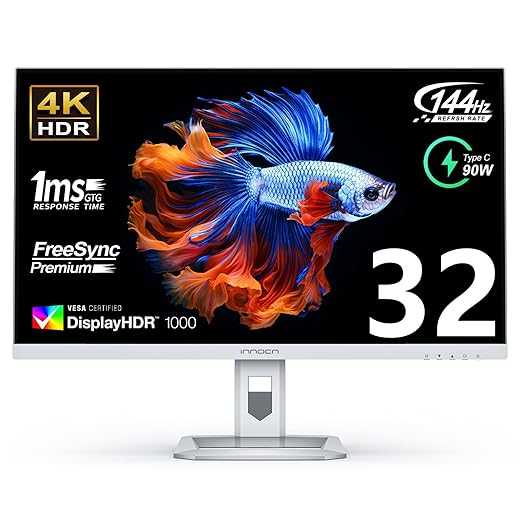
INNOCN 32-inch Mini LED 4K Monitor
We view this INNOCN as an aggressive value play: lots of local dimming zones, 4K at 144Hz, and USB‑C connectivity for a price that undercuts established brands. It’s a strong option if you prioritize raw HDR impact, but the software and firmware polish can lag behind premium rivals.
Why this model exists
INNOCN’s 32M2V pushes Mini‑LED into a competitive price bracket. The pitch is simple: give consumers a 32‑inch 4K panel with dozens (over a thousand claimed) of local‑dimming zones, high refresh capability, and modern inputs like USB‑C, and they’ll get Mini‑LED benefits without the price premium of larger name brands.
What it actually delivers
When everything works, HDR scenes pop and the monitor behaves like more expensive competitors. The USB‑C convenience and KVM features make it particularly useful where the monitor doubles as a docking station for a laptop and desktop.
Tradeoffs we noticed
The principal issue is polish. The OSD and firmware can feel brittle: users report HDR‑mode quirks, sporadic flicker, and occasional difficulty getting stable 144Hz/HDR combos across different platforms. Customer support and regional warranty fulfillment have inconsistent reports, so factor in potential support headaches. If you’re comfortable tolerating a few software niggles for significantly lower cost, this monitor is a lot of hardware for the money; if you need rock‑solid out‑of‑the‑box behavior, consider spending up the ladder to a big‑brand offering.
Frequently asked questions
Which is better, OLED or Mini-LED?
There is no universal winner: OLED fits some buyers and Mini-LED fits others. We compare specs, daily use, and trade-offs in this guide so you can match the pick to your budget and workflow, not a single spec sheet.
What is the main difference between OLED and Mini-LED?
OLED and Mini-LED target overlapping but not identical use cases. The sections above break down design, performance, ecosystem, and value so you can see where each product pulls ahead and where it compromises.
Should I buy OLED or Mini-LED first?
Buy the product that removes your biggest daily friction first. If OLED solves your primary pain point, start there; if Mini-LED is the bottleneck in how you actually work or play, prioritize it. Many households add the other later.
Is OLED worth it over Mini-LED?
OLED is worth the premium over Mini-LED when you will use the features that justify the price—extra performance, build quality, or ecosystem lock-in. If those extras go unused, Mini-LED usually delivers better value.
Can OLED replace Mini-LED?
For some users, yes; for others, no. OLED can cover most tasks Mini-LED handles, but gaps in compatibility, accessories, or specialized workflows may still matter. Use our comparison table and verdict to see which gaps apply to you.
Who should choose OLED vs Mini-LED?
Choose OLED if its strengths match how you will use it every day; choose Mini-LED if you need its specific advantages or a lower entry price. When in doubt, favor the option that fixes your most frequent frustration—not the highest spec on paper.
Final Thoughts
We’d pick one OLED and one Mini‑LED as the clearest winners this cycle — browse more Top Picks roundups or product comparisons if you want alternate panel types.
Sony BRAVIA 8 II (55-inch QD‑OLED) — Best for movie lovers and console players who want a turnkey cinematic experience. Its QD‑OLED panel delivers richer color volume and inky blacks that make film and HDR really sing, and Sony’s screen‑driven audio means you often don’t need a soundbar to get convincing theater sound. If you care about calibrated color out of the box, PS5 performance (low latency, great HDR tone mapping), and a compact footprint that still nails cinematic staging, this is our pick.
Samsung 65-inch 8K Neo QLED QN900F — Best for bright rooms, mixed‑use living rooms, and anyone thinking ahead to 8K. Samsung’s high‑density Mini-LED array plus an aggressive AI upscaler give you the kind of highlight control and clean detail recovery that actually improves non‑8K streams and console output. It’s a premium buy, but if you want maximum HDR punch, large‑screen presence, and the most future‑proof silicon for upscaling, this is the Mini‑LED to choose.
In short: choose the Sony QD‑OLED when you prioritize cinematic color, black levels, and integrated audio; choose the Samsung Neo QLED when you need brightness, spec‑heavy upscaling, and large‑room versatility. For gamers who need a smaller footprint, the LG 48‑inch OLED evo C4 remains our favorite compact OLED option thanks to HDMI 2.1 support and low latency — but as a headline decision in 2026, Sony (OLED) and Samsung (Mini‑LED) best illustrate why each technology still matters.

Princess Rioboca is the Lead Editorial Writer at Option Cutter, bringing over seven years of hands-on experience in consumer technology journalism. Specializing in home networking and smart home architecture, she transforms complex technical data into practical, real-world upgrades. Princess personally tests and audits every product she reviews—evaluating real-world Wi‑Fi throughput, cable management durability, and streaming ecosystem stability—to filter out spec-sheet noise. Her rigorous, field-tested insights are designed to give readers transparent, unbiased buying advice on what to purchase, what to skip, and exactly why.